


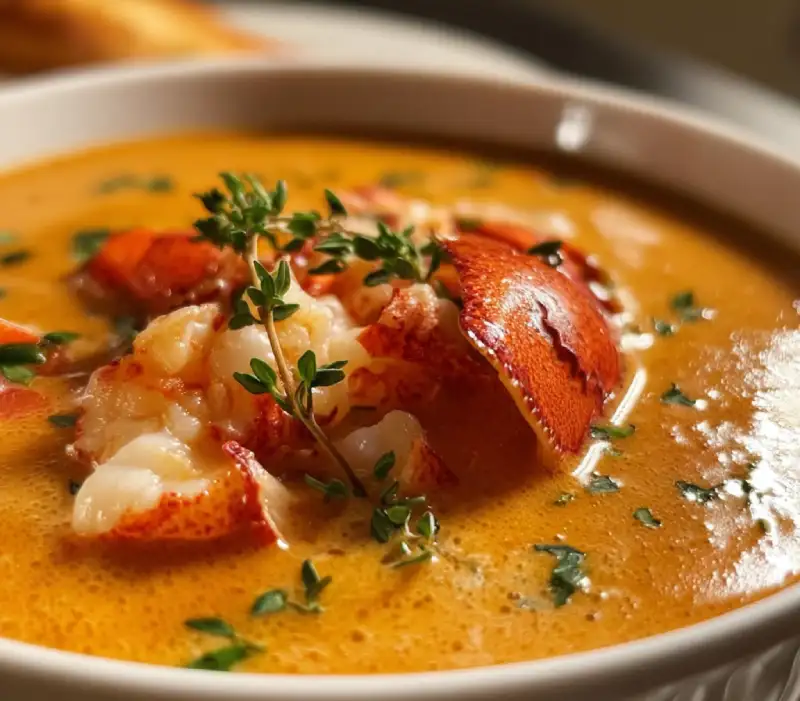
Mastering Gordon Ramsay’s Lobster Bisque: Your Go-To Recipe
Imagine a spoonful of pure, unadulterated luxury. That’s what you get with Gordon Ramsay Lobster Bisque. It’s rich, velvety, and bursting with the sweet, delicate flavor of lobster, all balanced by aromatic vegetables and a hint of brandy. This isn’t just soup; it’s an experience, a culinary masterpiece that transforms a meal into a special occasion. Forget about bland, overly creamy bisques you might have tried before. This recipe, inspired by one of the world’s most renowned chefs, will guide you to create a bisque so profound in flavor and silky in texture, it’ll leave an unforgettable impression. Get ready to impress your family and friends, or simply treat yourself to an exquisite dish that’s surprisingly achievable in your own kitchen! For more delicious recipes to elevate your cooking, explore here.
Table of Contents
- Why This Lobster Bisque Recipe Delivers Big Flavor
- Ingredients for an Authentic Lobster Bisque (and Smart Substitutions)
- Step-by-Step: Crafting Your Gordon Ramsay Lobster Bisque
- Expert Tips for a Restaurant-Quality Bisque
- What to Serve with Your Decadent Lobster Bisque
- Storing and Reheating Your Lobster Bisque
- Frequently Asked Questions About Lobster Bisque
Why This Lobster Bisque Recipe Delivers Big Flavor
- Rich, unbelievably silky texture: Achieved through careful straining, blending, and the perfect balance of a roux and heavy cream, creating a mouthfeel that’s purely luxurious.
- Deep, balanced lobster essence: Every part of the lobster is utilized, especially the shells and heads, to extract maximum flavor, resulting in an intense, authentic taste that’s never overpowering.
- Aromatic and complex depth from aromatics: The classic mirepoix, along with garlic and a touch of savory herbs, builds a foundational layer of flavor that complements and enhances the lobster.
- Perfectly decadent finish: A subtle whisper of brandy and tomato paste adds an umami depth and a beautiful hue, making every spoonful a rich, indulgent experience.
Ingredients for an Authentic Lobster Bisque (and Smart Substitutions)
Here is what you need and why:
Fresh Lobster (heads and shells are key!): This is the star of our Gordon Ramsay Lobster Bisque. Fresh, whole lobsters (about 1.5-2 lbs each for 4 servings) are ideal. The shells, especially from the body and head, contain immense flavor that will be extracted to create the foundation of your bisque. Don’t discard them! If fresh live lobster is unavailable, frozen lobster tails can work for the meat, but try to source some raw lobster shells from a good fishmonger for the stock base. You could also use shrimp shells for a similar, though less intense, effect.
Aromatic Vegetables (Mirepoix essentials and supporting players): We’re talking onions, carrots, and celery – the holy trinity of flavor building. These release their sweetness and earthy notes when sautéed, forming the backbone of the bisque. Garlic and leeks can also be added for extra complexity.
Brandy/Cognac (for deglazing and flavor boost): A splash of good quality brandy or cognac is crucial for deglazing the pan. It lifts all those caramelized bits from the bottom, adding a nuanced depth and a sophisticated warmth to the bisque. If you prefer to avoid alcohol, a good quality non-alcoholic red wine or even a strong mushroom broth can be a substitute, though the flavor profile will differ slightly.
Tomato Paste (for color and umami): Just a tablespoon or two, cooked down, enhances the color of your bisque to a beautiful rusty orange and provides a concentrated umami punch that rounds out the flavors beautifully. Don’t skip this!
Chicken Stock or Fish Stock (the liquid base): A high-quality stock is essential here. Fish stock will give you a purer seafood flavor, while good chicken stock provides a rich background without overpowering the lobster. Avoid vegetable broths as they can sometimes be too sweet or herbaceous for this delicate flavor profile. You can make your own fish stock using fish bones for the best results, or opt for a low-sodium, good-quality store-bought option.
Heavy Cream (for luxurious richness): This is what gives the bisque its signature velvety texture and luxurious mouthfeel. There’s no real substitute for heavy cream if you want that authentic richness, but full-fat coconut milk can be used for a dairy-free version, though it will impart a subtle coconut flavor.
Spices & Herbs (bay leaf, thyme, peppercorns): Simple yet powerful, these aromatics infuse the stock with an earthy complexity that elevates the lobster flavor. A fresh sprig of thyme and a bay leaf are classics. You might also add a pinch of cayenne pepper for a subtle warmth if you like a little kick.
Butter & Olive Oil (for sautéing and roux): A combination of these two is perfect for sautéing the aromatics and shells, providing a rich flavor from the butter and a higher smoke point from the olive oil. Butter is also key for making the roux that thickens our bisque.
Flour (for thickening the roux): All-purpose flour is typically used to create a roux, which helps to thicken the bisque and bind the flavors. You could use a gluten-free all-purpose flour blend if needed, ensuring it’s a good 1:1 substitute for thickening.
Step-by-Step: Crafting Your Gordon Ramsay Lobster Bisque
Follow these step-by-step photos:
1. Prepping the Lobster: Meat and Shells
Begin by steaming or boiling your lobsters until just cooked. Once cool enough to handle, meticulously remove all the meat from the tails, claws, and knuckles. Dice the meat into bite-sized pieces and set aside – this will be added at the very end to preserve its tenderness. Now, here’s the crucial part: THOROUGHLY CRUSH and chop the lobster shells, especially the heads and any tomalley (the green liver), into small pieces. These shells are packed with flavor and will be the heart of your bisque base.
2. Building the Flavor Base: Sautéing Aromatics and Shells
In a large, heavy-bottomed pot or Dutch oven, heat a generous drizzle of olive oil and a knob of butter over medium-high heat. Add your chopped onions, carrots, and celery (mirepoix) and sauté until softened and fragrant, about 5-7 minutes. Now, add your crushed lobster shells. Cook them, stirring frequently, until they turn bright red and begin to caramelize slightly, about 8-10 minutes. This step is vital for extracting maximum flavor from the shells. Add your garlic and a sprig of thyme and cook for another minute until fragrant.
3. Deglazing with Alcohol: The Brandy Factor
Pour in the brandy or cognac. Immediately scrape the bottom of the pot with a wooden spoon, loosening all those delicious caramelized bits (fond). Let it simmer for a couple of minutes until the alcohol has cooked off and reduced slightly. You’ll smell an incredible aroma filling your kitchen – that’s flavor developing!
4. Adding Tomato Paste and Stock: Simmering for Depth
Stir in the tomato paste and cook for 2-3 minutes, pressing it against the bottom of the pot to deepen its flavor and color. Then, pour in your chicken or fish stock, along with a bay leaf and a few black peppercorns. Bring the mixture to a gentle boil, then reduce the heat to low, cover, and simmer for at least 45 minutes to 1 hour. This extended simmering time allows all the incredible lobster and aromatic flavors to meld and infuse the stock.
5. Straining and Reducing: Extracting Every Drop of Flavor
Carefully pour the entire contents of the pot through a fine-mesh sieve set over another large bowl or pot. Press down firmly on the solids (the shells and vegetables) with a ladle or spoon to extract every last drop of liquid and flavor. Discard the solids. Return the strained, flavorful liquid to a clean pot. Bring it to a simmer and reduce it by about one-quarter to one-third, intensifying the flavors further. You should have a concentrated, fragrant lobster stock.
6. Creating the Velvety Texture: The Roux and Cream
In a separate small saucepan, melt a tablespoon of butter over medium heat. Whisk in a tablespoon of flour to create a light roux. Cook for 1-2 minutes, stirring constantly, until it forms a smooth paste and smells slightly nutty (don’t let it brown too much). Gradually whisk this roux into your simmering reduced lobster stock, ensuring no lumps form. Allow it to simmer for another 5-10 minutes to thicken slightly. Finally, stir in the heavy cream. Bring it back to a gentle simmer, but do not boil after adding the cream.
7. Finishing Touches: Seasoning and Garnishing
Taste your bisque and season generously with salt and freshly ground black pepper. Remember, you want to bring out the lobster’s natural sweetness. Stir in the reserved diced lobster meat just long enough to warm it through – don’t overcook it! Ladle the velvety Gordon Ramsay Lobster Bisque into warm bowls. Garnish with a sprinkle of fresh chives, parsley, or a drizzle of good quality olive oil or crème fraîche for an elegant finish. Serve immediately and savor every glorious spoonful!
Expert Tips for a Restaurant-Quality Bisque
- Don’t waste a single shell! The real secret to a flavorful bisque lies in extracting every bit of essence from the lobster shells. Crush them well before sautéing.
- Sauté shells thoroughly for maximum flavor extraction: This caramelization step is critical. Don’t rush it; allowing the shells to brown slightly deepens the bisque’s flavor immensely.
- Don’t rush the simmering process: The long, slow simmer of the stock is where the magic happens. It allows the flavors to truly develop and meld. Patience here pays off in a big way.
- Taste and adjust seasoning frequently: As the bisque reduces, flavors intensify. Taste at each major step and adjust salt and pepper to ensure perfect balance.
- Achieve perfect consistency – not too thick, not too thin: A bisque should be velvety and pourable, coating the back of a spoon, but not overly gloopy. Adjust with a little more stock or cream if too thick, or a bit more roux if too thin (though this is rare if you’ve reduced properly).
- Blend carefully for the smoothest finish: If you want an even smoother bisque after straining, you can carefully blend a small portion of the finished bisque with an immersion blender, but be cautious not to over-blend as it can make it gummy. For an ultra-smooth finish, pass it through a Chinois (conical sieve) a second time.
What to Serve with Your Decadent Lobster Bisque
This luxurious Gordon Ramsay Lobster Bisque is often a star on its own, but a few simple accompaniments can make the meal even more special:
- Crusty bread or baguette: Perfect for soaking up every last drop of that creamy goodness.
- Garlic croutons: Add a wonderful textural contrast and a garlicky kick.
- Light green salad: A simple salad with a bright vinaigrette provides a refreshing counterpoint to the richness of the bisque.
- Crisp white wine: A Chablis, Sancerre, or a dry rosé pairs beautifully with the seafood.
Storing and Reheating Your Lobster Bisque
Refrigeration guidelines: Once cooled completely, transfer your Gordon Ramsay Lobster Bisque to an airtight container. It will keep beautifully in the refrigerator for up to 3 days. The flavors may even deepen overnight!
Freezing instructions: Lobster bisque freezes surprisingly well. Allow it to cool thoroughly. You can freeze it in individual portions in freezer-safe containers or bags for up to 2-3 months. When freezing, it’s sometimes best to freeze the bisque *without* the added cream. You can then add the cream when reheating for the freshest texture. If freezing with cream, be aware that dairy can sometimes separate slightly upon thawing. Gently whisking during reheating usually fixes this.
Gentle reheating methods (avoid curdling!): To reheat, thaw frozen bisque overnight in the refrigerator. Place the bisque in a saucepan over low-medium heat, stirring occasionally. Avoid boiling it rapidly, especially if it contains cream, as this can cause it to separate or curdle. Gently warm it through until simmering. If you froze it without cream, add the heavy cream during this reheating stage and warm until just steamy. A gentle whisk can help restore consistency if any separation occurs.
Frequently Asked Questions About Lobster Bisque
Can I use pre-cooked lobster?
What if I don’t have brandy?
How can I make it spicier?
Why is my bisque separating?
Gordon Ramsay Lobster Bisque
- Total Time: 2 hours
- Yield: 4 servings 1x
Description
Indulge in the exquisite richness of Gordon Ramsay’s Lobster Bisque, a luxurious and flavorful soup perfect for special occasions. This step-by-step guide helps you recreate a restaurant-quality dish at home.
Ingredients
- 2 x 1.5-2 lb fresh lobsters (or lobster tails + 1 lb raw lobster shells)
- 2 tbsp olive oil
- 2 tbsp unsalted butter
- 1 large onion, chopped
- 2 carrots, chopped
- 2 celery stalks, chopped
- 4 cloves garlic, minced
- 1 sprig fresh thyme
- 1 bay leaf
- 5–6 black peppercorns
- 1/4 cup brandy or cognac
- 1 tbsp tomato paste
- 6 cups chicken stock or fish stock
- 1 tbsp all-purpose flour
- 1 cup heavy cream
- Salt and freshly ground black pepper to taste
- Fresh chives or parsley, for garnish
Instructions
- 1. Prep Lobster: Steam or boil lobsters until just cooked. Remove and dice meat; set aside. Crush shells thoroughly.
- 2. Build Flavor Base: Heat olive oil and butter in a large pot. Sauté onion, carrots, celery until softened. Add crushed lobster shells and cook until bright red and slightly caramelized (8-10 mins). Add garlic and thyme; cook 1 minute.
- 3. Deglaze: Pour in brandy; scrape up browned bits. Reduce for 2 minutes.
- 4. Simmer Stock: Stir in tomato paste; cook 2-3 minutes. Add stock, bay leaf, peppercorns. Bring to a boil, then reduce heat, cover, and simmer for 45-60 minutes.
- 5. Strain & Reduce: Strain contents through a fine-mesh sieve, pressing solids. Discard solids. Return liquid to clean pot. Reduce by 1/4 to 1/3 over medium heat.
- 6. Create Velvety Texture: In a small saucepan, melt 1 tbsp butter. Whisk in 1 tbsp flour to make a roux; cook 1-2 minutes. Gradually whisk roux into simmering lobster stock. Simmer 5-10 minutes. Stir in heavy cream; warm gently (do not boil).
- 7. Finish & Serve: Season with salt and pepper. Stir in reserved lobster meat to warm. Ladle into bowls and garnish with fresh chives or parsley.
- Prep Time: 30 mins
- Cook Time: 1 hour 30 mins