


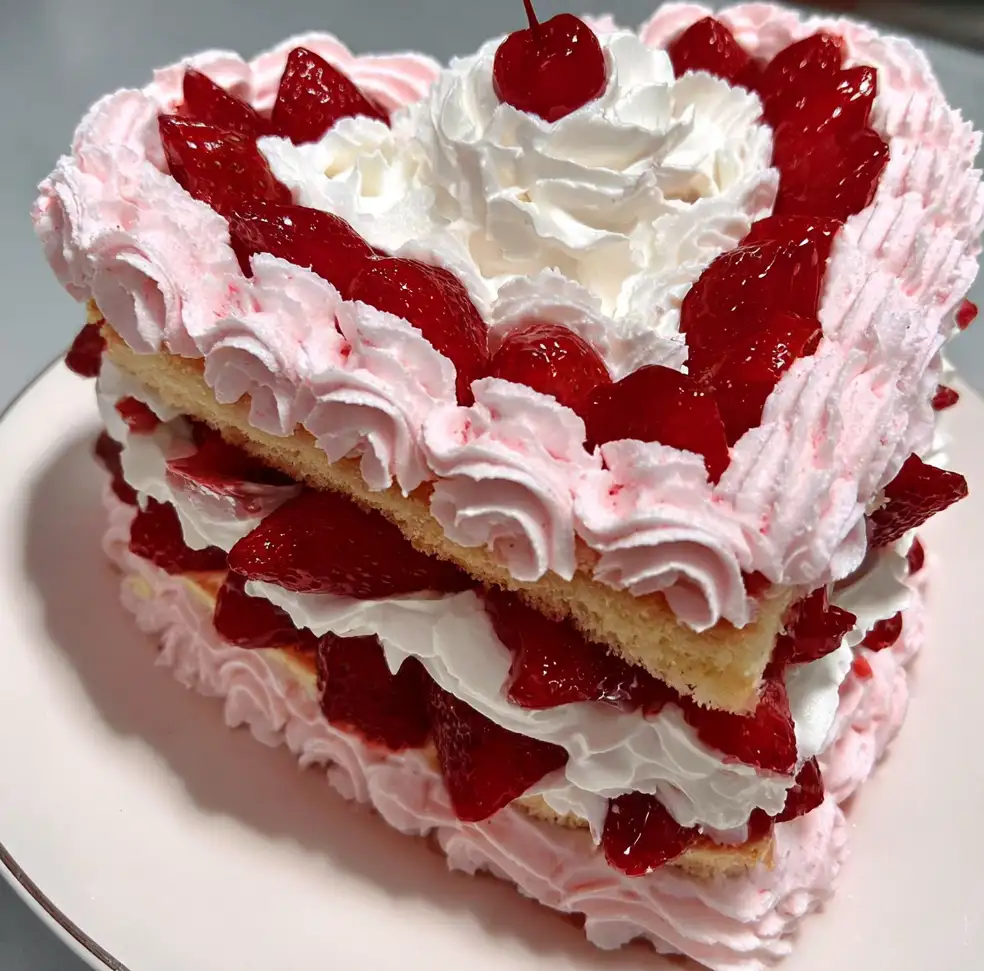
Bake Your Love: Heart-Shaped Cakes Made Easy
Oh, the joy of biting into a perfectly baked Heart Shaped Cake! Imagine a cake that’s not just visually stunning, but also boasts a crumb so tender it almost melts in your mouth, enveloped in a flavor that sings of pure deliciousness. These aren’t just any cakes; they’re an expression of affection, baked into every bite. Whether you’re celebrating an anniversary, a birthday, or simply want to show someone you care, our recipe for Heart Shaped Cakes will guide you to baking perfection. Get ready to impress with a dessert that’s as heartfelt as it is heavenly. See more easy recipes for delightful treats right here!
Table of Contents
- Why This Heart-Shaped Cake Recipe Works
- Essential Ingredients & Smart Substitutions for Your Heart-Shaped Cake
- Step-by-Step: Crafting Your Perfect Heart-Shaped Cakes
- Expert Tips for Heart-Shaped Cake Success
- What to Serve With Your Heart-Shaped Cakes
- Storing and Reheating Your Heart-Shaped Cakes
- Heart-Shaped Cakes: Your FAQs Answered
Why This Heart-Shaped Cake Recipe Works
- Moist and tender crumb every time: We utilize a perfect balance of wet ingredients and just the right mixing technique to ensure a supremely soft and moist cake.
- Rich, balanced flavor profile: A harmonious blend of vanilla and a hint of almond extract creates a universally loved taste that isn’t overly sweet.
- Easy to adapt for various occasions: This versatile base recipe can be customized with different frostings, colors, and decorations to suit any celebration.
- Perfect for beginners and seasoned bakers: Our clear, detailed instructions and helpful tips make this an approachable project for all skill levels, delivering professional results.
Essential Ingredients & Smart Substitutions for Your Heart-Shaped Cake
Here is what you need and why:
Flour Power: All-Purpose vs. Cake Flour: For a deliciously tender Heart Shaped Cake, I prefer using bleached all-purpose flour for its consistent results. However, if you’re aiming for an even finer, more delicate crumb, cake flour is an excellent substitute. Just remember that cake flour has a lower protein content, so your cake might be a touch more fragile. For every cup of all-purpose flour, you can substitute 1 cup less 2 tablespoons of cake flour, replacing those 2 tablespoons with cornstarch to mimic the texture.
Sweet Talk: Sugar’s Role and Alternatives: Granulated sugar is a key player here, not just for sweetness, but also for moisture, tenderness, and aiding in browning. If you’re looking to reduce refined sugar, you could experiment with a granulated sugar alternative like erythritol or stevia blends, keeping in mind that these can sometimes slightly alter the texture and moisture content of the cake. For a richer, more caramel-like note, a small amount of light brown sugar can be incorporated.
Fat Happy: Butter, Oil, and Flavor: Unsalted butter, softened to room temperature, is my go-to for its rich flavor and contribution to a tender crumb. It also helps cream air into the batter, resulting in a lighter cake. You can substitute a neutral-flavored oil like canola or vegetable oil for a slightly denser, more uniformly moist cake, though you’ll miss some of that classic butter flavor. If using oil, reduce the amount by a small percentage as oil is 100% fat, unlike butter.
Dairy Delights: Milk, Buttermilk, and Sour Milk Hacks: Whole milk provides richness and helps activate the leavening agents. For an exceptionally moist and tangy cake, buttermilk is fantastic! If you don’t have buttermilk, you can easily make a sour milk hack: add 1 tablespoon of lemon juice or white vinegar to a measuring cup, then fill with whole milk to the 1-cup mark. Let it sit for 5-10 minutes until it curdles slightly.
Leavening Legends: Baking Power and Baking Soda Explained: Both baking powder and baking soda are crucial for making our Heart Shaped Cakes rise beautifully. Baking powder is a double-acting leavener, meaning it reacts once with liquid and again with heat, providing consistent lift. Baking soda, on the other hand, requires an acidic ingredient (like the sour milk or buttermilk we discussed) to activate. Using both in appropriate ratios ensures a perfect rise and tender texture.
Flavor Boosters: Vanilla and Other Extracts: Pure vanilla extract is non-negotiable for its warm, comforting aroma and flavor. For an extra special touch, I often add a tiny splash of almond extract – it beautifully complements the vanilla without overpowering it. Other extracts, like strawberry or raspberry, could be used to subtly shift the flavor profile for themed cakes.
Icing on the Cake: Frosting Ingredients: While the cake itself is the star, a good frosting elevates it. My favorite for these Heart Shaped Cakes is a classic American buttercream made with unsalted butter, powdered sugar, vanilla extract, a pinch of salt, and a splash of milk or cream. Cream cheese frosting also pairs wonderfully, offering a tangy counterpoint to the sweet cake. For colorful expressions of love, gel food coloring is your best friend!
Step-by-Step: Crafting Your Perfect Heart-Shaped Cakes
Follow these step-by-step photos:
1. Prep Your Pans: The Foundation for Flawless Release
The first step to perfectly unmolded Heart Shaped Cakes is proper pan preparation. Generously grease your heart-shaped cake pans with butter or baking spray. Then, dust them thoroughly with flour, tapping out any excess. For extra insurance, especially with intricate heart molds, you can line the bottom with parchment paper cut to fit the shape before greasing and flouring. This creates a non-stick barrier that ensures your beautiful cake releases without a hitch. This simple step prevents sticking and saves you from baking heartbreak!
2. Dry Ingredients: The Sifting Secret for Lightness
Combine all your dry ingredients – flour, baking powder, baking soda, and salt. The secret here is to sift them together. Sifting isn’t just about removing lumps; it thoroughly aerates the flour, which contributes to a lighter, more tender crumb in your finished Heart Shaped Cakes. It also ensures that the leavening agents are evenly distributed, leading to a consistent rise. Don’t skip this easy step!
3. Wet Ingredients: Achieving Emulsion for Moisture and Flavor
In a separate bowl, cream together the softened butter and sugar until light and fluffy. This process, known as creaming, incorporates air, which is essential for a tender cake. Beat in the eggs one at a time, ensuring each is fully incorporated before adding the next. Finally, stir in the vanilla and any other extracts. The goal is a well-emulsified mixture that is pale in color and fluffy in texture. This forms the backbone of moisture and flavor for your Heart Shaped Cakes.
4. Combining Wet and Dry: The Gentle Touch for Tenderness
To combine the wet and dry ingredients, add about one-third of the dry mixture to the wet mixture, mixing on low speed until just combined. Then, alternately add half of the milk, mixing until just incorporated, followed by another third of the dry ingredients, the remaining milk, and finally the last of the dry ingredients. Always begin and end with the dry ingredients. The key here is to mix until just combined – overmixing develops the gluten in the flour, resulting in a tough, dense cake. You want your Heart Shaped Cakes to be tender and soft!
5. Filling the Pans: Even Distribution is Key
Carefully divide the cake batter evenly between your prepared heart-shaped pans. Use a kitchen scale for precision if you have one; equal batter means equal baking and level cakes, making stacking and decorating much easier. Gently tap the filled pans on the counter a couple of times to release any large air bubbles. This ensures a uniform crumb in your finished Heart Shaped Cakes. Now they’re ready for the oven!
6. Baking to Perfection: Temperature and Time
Preheat your oven to the specified temperature. Place the pans in the center of the oven, allowing even heat circulation. Baking times can vary slightly depending on your oven, so keep an eye on your cakes. For the best Heart Shaped Cakes, bake until a wooden skewer or toothpick inserted into the center comes out clean or with a few moist crumbs attached, but no wet batter. The edges should be lightly golden and pulling away from the sides of the pan slightly.
7. Cooling Down: The Patience Principle
Once baked, remove your Heart Shaped Cakes from the oven and let them cool in their pans on a wire rack for about 10-15 minutes. This allows the cakes to firm up slightly, making them less prone to breaking when unmolded. After this initial cooling, invert the cakes onto the wire rack to cool completely. Cooling completely before frosting is vital; frosting a warm cake will lead to a melty, messy disaster!
8. Decorating Delights: Frosting and Finishing Touches
Once your Heart Shaped Cakes are completely cool, it’s time for the fun part: decorating! Apply a thin crumb coat of frosting first to seal in any loose crumbs, then chill the cakes for 15-20 minutes. Follow with a final, thicker layer of frosting. Get creative with piping designs, sprinkles, edible glitter, or even fresh fruit to make your heart cakes truly special. This is where your love truly shines through!
Expert Tips for Heart-Shaped Cake Success
- Accurate Measuring: The Baker’s Golden Rule: Always measure your ingredients precisely. For flour, use the spoon-and-level method (spoon flour into the measuring cup, then level off with a straight edge). For liquids, use liquid measuring cups at eye level. Baking is a science, and exact measurements prevent costly mistakes for your Heart Shaped Cakes.
- Room Temperature Ingredients: Why It Matters: Ensure butter, eggs, and dairy are at room temperature. This allows them to emulsify better, creating a smooth, homogenous batter that traps air more efficiently, resulting in a lighter, more tender cake. Cold ingredients can cause the batter to curdle and reduce volume.
- Don’t Overmix: The Enemy of Tenderness: Once you add the dry ingredients to the wet, mix only until just combined. Overmixing develops gluten, leading to a tough, dense cake. A few lumps of flour are perfectly fine – they’ll disappear during baking and contribute to a tender crumb.
- Testing for Doneness: Beyond the Toothpick Test: While the toothpick test is good, also look for other signs: the cake should spring back when lightly touched in the center, and the edges should be slightly pulled away from the sides of the pan. A light golden color is also a good indicator.
- Dealing with Domed Cakes: Leveling Techniques: If your Heart Shaped Cakes have domed tops, don’t fret! Once completely cooled, you can use a serrated knife to carefully level them, creating flat surfaces perfect for stacking and frosting. These trimmed scraps make delicious chef’s snacks! For more advanced techniques on preventing domes, check out this great resource from King Arthur Baking: How to Bake a Flat Cake.
- Troubleshooting Common Baking Issues: If your cake is dry, you might have overbaked it or used too much flour. If it’s too crumbly, it could be underbaked or lack sufficient binding ingredients. Always refer back to the recipe and ensure your oven temperature is accurate (an oven thermometer is a great investment!).
What to Serve With Your Heart-Shaped Cakes
- Coffee and Tea Pairings: A warm cup of freshly brewed coffee or a delicate herbal tea makes the perfect accompaniment to a slice of Heart Shaped Cake. The slight bitterness of coffee or the subtle aromatics of tea perfectly balance the sweetness of the cake.
- Fresh Fruit Accompaniments: Brighten up your dessert with a side of fresh berries – raspberries, strawberries, or blueberries add a lovely tart contrast and beautiful color. A spoonful of sliced peaches or a medley of seasonal fruits also works wonderfully.
- Ice Cream & Sauces: For an indulgent treat, serve your heart cakes with a scoop of vanilla bean ice cream or a dollop of freshly whipped cream. A drizzle of raspberry coulis, warm chocolate fudge, or salted caramel sauce elevates the experience to a gourmet level.
Storing and Reheating Your Heart-Shaped Cakes
- Airtight Storage for Freshness: To keep your Heart Shaped Cakes fresh, store them in an airtight cake container at room temperature for up to 2-3 days. If your frosting contains cream cheese or other perishable ingredients, refrigerate the cake. Bring refrigerated cakes back to room temperature for optimal flavor and texture before serving.
- Freezing for Longer Enjoyment: You can absolutely freeze unfrosted or frosted heart cakes! For unfrosted cakes, wrap each cooled cake layer tightly in plastic wrap, then again in aluminum foil. For frosted cakes, flash freeze until the frosting is firm, then wrap similarly. They can be frozen for up to 2-3 months.
- Reviving Stored Cakes: To thaw frozen cakes, transfer them to the refrigerator overnight, then bring them to room temperature before serving. If you’re reviving a room-temperature cake that feels a little dry, a quick zap in the microwave for 10-15 seconds per slice can sometimes soften it up, but be careful not to overheat.
Heart-Shaped Cakes: Your FAQs Answered
Can I use a different size heart pan?
How do I prevent my cake from sticking?
Can I make these gluten-free?
What’s the best frosting for heart-shaped cakes?
How far in advance can I bake these?
Delicious Heart Shaped Cakes
- Total Time: 39 minute
- Yield: 1 (8-inch) two-layer cake or 12 cupcakes 1x
Description
Bake the most delightful and tender Heart Shaped Cakes, perfect for expressing love and celebrating special moments. This recipe yields a moist crumb with a rich, balanced flavor that everyone will adore.
Ingredients
- 2 ½ cups (300g) all-purpose flour, sifted
- 1 ½ teaspoons baking powder
- ½ teaspoon baking soda
- ½ teaspoon salt
- 1 cup (226g) unsalted butter, softened
- 1 ¾ cups (350g) granulated sugar
- 2 large eggs, room temperature
- 1 teaspoon pure vanilla extract
- ½ teaspoon almond extract (optional)
- 1 cup (240ml) whole milk, room temperature (or buttermilk/sour milk)
- For Frosting: (Example: American Buttercream)
- 1 cup (226g) unsalted butter, softened
- 4 cups (450g) powdered sugar, sifted
- 1–2 tablespoons whole milk or cream
- 1 teaspoon pure vanilla extract
- Pinch of salt
- Gel food coloring (optional)
Instructions
- Preheat Oven & Prep Pans: Preheat your oven to 350°F (175°C). Grease and flour two 8-inch heart-shaped cake pans, or line with parchment paper then grease and flour.
- Combine Dry Ingredients: In a medium bowl, whisk together the sifted flour, baking powder, baking soda, and salt. Set aside.
- Cream Wet Ingredients: In a large mixing bowl, cream the softened butter and granulated sugar with an electric mixer on medium-high speed until light and fluffy, about 3-5 minutes.
- Add Eggs & Extracts: Beat in the eggs one at a time, incorporating fully after each addition. Stir in the vanilla extract and almond extract (if using).
- Combine Wet and Dry: Gradually add the dry ingredients to the wet mixture, alternating with the milk, beginning and ending with the dry ingredients. Mix on low speed until just combined, being careful not to overmix.
- Fill & Bake: Divide the batter evenly between the prepared heart-shaped pans. Bake for 30-35 minutes, or until a wooden skewer inserted into the center comes out clean or with minimal moist crumbs.
- Cool: Let the cakes cool in the pans on a wire rack for 10-15 minutes, then invert onto the rack to cool completely before frosting.
- Prepare Frosting: In a large bowl, beat softened butter until creamy. Gradually add sifted powdered sugar, alternating with milk/cream, vanilla, and salt. Beat until light and fluffy. Add gel food coloring if desired.
- Frost & Serve: Once cakes are completely cool, level if necessary, then frost and decorate as desired. Enjoy your beautiful Heart Shaped Cakes!
- Prep Time: 25 mins
- Cook Time: 30-35 mins