


Table of Contents
- Introduction: Easy Marbled Candy Apples
- How Marbled Candy Apples Work
- Ingredients and Smart Substitutions
- Step-by-Step: Crafting Your Marbled Candy Apples
- Expert Tips for Perfect Marbled Candy Apples
- What to Serve With Marbled Candy Apples
- Storing and Reheating Marbled Candy Apples
- Marbled Candy Apples FAQ
Introduction: Easy Marbled Candy Apples
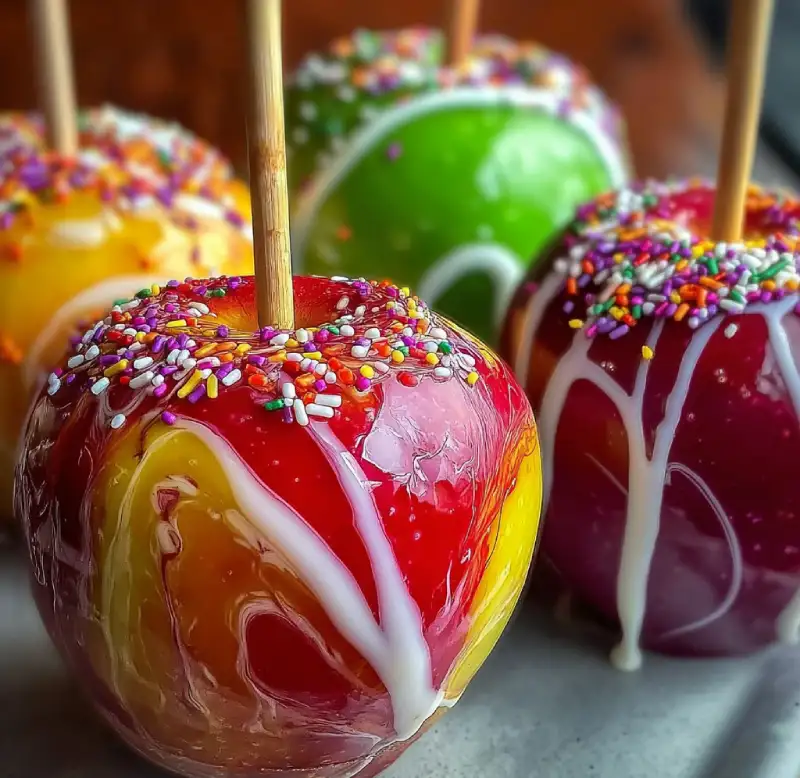
Oh, the glorious crunch! There’s nothing quite like biting into a perfectly crisp candy apple, and when it’s adorned with a mesmerizing marbled design, it’s not just a treat for your taste buds, but a feast for your eyes too. The delightful contrast of the sweet, glassy candy shell against the tart, crisp apple is simply irresistible. This isn’t just baking; it’s edible art! If you’re looking for an unforgettable dessert that’s sure to impress, these Marbled Effect Candy Apples are your next project. Trust me, the ‘oohs’ and ‘aahs’ you’ll get are totally worth it! See more good recipes here , but make sure to master these beautiful candy apples first!
Why This Recipe Works
- Achieves a brilliantly glossy, crack-free candy coating every time.
- The marbling technique is surprisingly easy, allowing for stunning, unique designs.
- Balances the intense sweetness of the candy with the natural tartness of the apple for a harmonious flavor.
- Provides crucial tips to prevent sticky coatings, ensuring your candy apples are picture-perfect.
How Marbled Candy Apples Work
Creating these stunning Marbled Effect Candy Apples involves a perfect dance of temperature, technique, and a touch of artistic flair. Let’s break down the magic.
Achieving the Glossy Candy Shell
The secret to that beautiful, hard, and impossibly shiny shell lies in the sugar syrup. We’re cooking sugar, corn syrup, and water to a specific high temperature – the hard crack stage (around 300-310°F or 149-154°C). At this point, nearly all the water has evaporated, leaving behind a concentrated sugar solution that, when cooled, becomes brittle and glossy. The corn syrup is crucial here; it acts as an invert sugar, preventing crystallization and keeping your candy smooth and clear.
Creating the Marbled Effect with Food Coloring
This is where the fun really begins! Rather than mixing the food coloring entirely into the syrup, we introduce drops of gel food coloring right into the pot just before dipping. As you swirl your apple, these distinct droplets of color get stretched and swirled around the apple’s surface, creating those beautiful, organic marbled patterns. It’s a technique that allows for endless creativity and ensures no two apples are exactly alike.
Balancing Sweetness with Apple Tartness
A pure sugar coating can be overwhelmingly sweet. That’s why choosing the right apple is paramount. Tart varieties like Granny Smiths cut through the richness of the candy, providing a refreshing counterpoint that makes the candy apple truly enjoyable, rather than just a sugar rush. It’s that beautiful sweet and sour combination that keeps you coming back for another bite.
Importance of Stable Candy Coating
Have you ever encountered a sticky candy apple? It’s usually due to humidity or not reaching the correct temperature. A stable coating is one that has reached the hard crack stage and has cooled completely. This stability is what gives it that satisfying snap and prevents it from turning into a gooey mess, making it easier to handle and enjoy.
Ingredients and Smart Substitutions
Here is what you need and why:
Apples: For candy apples, Granny Smith apples are the gold standard. Their tartness provides a crucial counterpoint to the sweet candy, preventing the dessert from being cloyingly sweet. They also have a firm texture that holds up well to the hot syrup. Other firm, tart apples like Fuji or Honeycrisp can work, but Granny Smiths are truly superior for this application. Ensure your apples are clean and completely dry.
Granulated Sugar: This is the backbone of our candy coating. Use regular white granulated sugar. Don’t try to substitute with brown sugar or powdered sugar here, as their properties will alter the candy’s texture and clarity significantly.
Light Corn Syrup: Absolutely essential for preventing crystallization. Corn syrup is an invert sugar that helps keep the candy smooth, clear, and pliable enough to withstand temperature changes without becoming granular. There isn’t a good direct substitute for corn syrup in candy making without risking a grainy texture or premature crystallization; avoid using alternatives like honey or maple syrup as they impart strong flavors and different chemical compositions.
Water: Simply helps dissolve the sugar and corn syrup to create a liquid solution that can then be cooked down. The water eventually evaporates, leaving behind the candy.
Gel Food Coloring: For the vibrant and distinct marbled effect, gel food coloring is non-negotiable. Unlike liquid food coloring, gel colors are highly concentrated and don’t add significant water to the candy mixture, which could destabilize the candy. Choose a few contrasting colors for the best marbling. For an external resource on choosing food coloring, check out King Arthur Baking’s guide to food coloring.
Flavor Extracts (Optional): A few drops of a clear extract like almond, vanilla, or even a fruit flavor can elevate your candy apples. Add it off the heat, right before dipping, to preserve its delicate notes. Make sure it’s an oil-based extract if you can find one, as alcohol-based ones can clash with the sugar solution.
Candy Thermometer: Critical for success. Precision past a certain point is key in candy making, and a reliable candy thermometer ensures you reach the exact hard crack stage (300-310°F or 149-154°C). Guessing temperatures will lead to either sticky, soft candy or burnt, unusable sugar. An instant-read thermometer can work if you are very quick, but a clip-on candy thermometer is best for continuous monitoring.
Step-by-Step: Crafting Your Marbled Candy Apples
Follow these step-by-step photos:
1. Prepare Your Apples and Sticks
Start by thoroughly washing your apples to remove any wax coating, as this can prevent the candy from adhering. A quick dip in boiling water for 10 seconds and then drying completely with a clean cloth or paper towel works wonders. Insert sturdy candy apple sticks or craft sticks firmly into the stem end of each apple, about halfway through, ensuring they are stable. Set aside on a parchment-lined baking sheet.
2. Make the Candy Syrup
Combine the granulated sugar, light corn syrup, and water in a heavy-bottomed saucepan. Stir gently over medium-high heat until the sugar dissolves. Once boiling, insert your candy thermometer and stop stirring. Allow the mixture to boil undisturbed until it reaches the hard crack stage, approximately 300-310°F (149-154°C). Achieving this precise temperature is key to a perfectly crisp, non-sticky coating.
3. Add Color: The Marbling Technique
Once the candy reaches the desired temperature, immediately remove it from the heat. This is a critical step for marbling. Carefully add drops of your chosen gel food coloring directly into the hot syrup, spacing them out slightly. Do not stir it in! You’ll want distinct blobs of color. Work quickly before the candy cools too much.
4. Dipping and Draining
Tilt the saucepan slightly to gather the syrup. Take one prepared apple by its stick and dip it into the hot candy, rotating and swirling it to pick up the colors and fully coat the apple. The untouched candy will pick up the color as you swirl, creating the marbled effect. Lift the apple, let any excess candy drip back into the pot, then gently scrape the very bottom of the apple against the rim of your saucepan to prevent a ‘foot’ of candy from forming.
5. Setting the Apples
Place each dipped Marbled Effect Candy Apple onto the parchment-lined baking sheet to cool and set completely. This can take anywhere from 15-30 minutes, depending on the temperature and humidity of your kitchen. Resist the urge to touch them until they are fully hardened and glossy.
Expert Tips for Perfect Marbled Candy Apples
- Humidity’s Impact: Avoid making candy apples on humid or rainy days. High humidity is the enemy of hard candy, as it can cause the finished coating to become sticky and soft. Choose a dry day for best results.
- Avoiding Hot Spots: For even cooking, ensure sugar crystals don’t stick to the sides of your pan. You can use a pastry brush dipped in water to gently wash down the sides of the pan during the initial boiling stage, or simply avoid vigorous stirring once boiling begins.
- Working Quickly: Candy hardens fast! Have all your apples prepped, food coloring ready, and parchment paper laid out before you even start cooking the syrup. The minute it hits the right temperature, you need to be ready to dip.
- Preventing Bubbles: Dip your apples smoothly and avoid jiggling them too much in the syrup. This can introduce air bubbles. A smooth, even rotation is best for a pristine finish.
- Creative Marbling Variations: Experiment with different color combinations! For a dramatic look, use black with a bright contrasting color. For holidays, try themed colors – red and green for Christmas, orange and black for Halloween.
What to Serve With Marbled Candy Apples
Pairing with Warm Beverages
The crisp sweetness of Marbled Effect Candy Apples is beautifully complemented by a warm beverage. Imagine enjoying one with a steaming mug of spiced apple cider, a rich hot chocolate, or a classic tea. The warmth and contrasting flavors create a cozy and satisfying dessert experience.
Serving as a Dessert Bar Feature
These visibly stunning apples are perfect as a show-stopping centerpiece for a dessert bar. Arrange them on an elegant platter alongside other treats like mini cupcakes, artisan cookies, or chocolate-dipped pretzels. Their vibrant colors and unique patterns make them an instant magnet for attention at parties, fall gatherings, or even as elegant wedding favors.
Storing and Reheating Marbled Candy Apples
Optimal Storage for Freshness
Once your Marbled Effect Candy Apples are completely cool and hard, store them individually wrapped in cello bags or non-stick plastic wrap at room temperature. It’s crucial not to refrigerate or freeze them, as the humidity and temperature changes can cause the candy coating to become sticky or crack. Stored properly, they will retain their crispness for 2-3 days.
Troubleshooting Soft Candy Coats
If your candy apples turn sticky, it’s usually due to humidity or not reaching a high enough temperature during cooking. Unfortunately, once the candy coating has absorbed moisture from the air, it’s difficult to fully restore its crispness without re-cooking the entire batch, which isn’t feasible with coated apples. Enjoy them quickly if they become soft, or consider them a delicious, albeit imperfect, treat.
Marbled Candy Apples FAQ
Why did my candy coating turn sticky?
Can I use different colored food gel?
How long do marbled candy apples last?
What kind of sticks should I use?
Marbled Effect Candy Apples
- Total Time: 45 minutes
- Yield: 6-8 candy apples 1x
Description
Craft stunning Marbled Effect Candy Apples with this easy-to-follow recipe. These beautiful treats feature a glossy, crisp candy shell over a tart apple.
Ingredients
- 6–8 medium Granny Smith apples
- 6–8 sturdy candy apple sticks
- 2 cups granulated sugar
- 1/2 cup light corn syrup
- 1/2 cup water
- Gel food coloring (2-3 colors)
- Optional: 1/2 tsp clear flavor extract (e.g., vanilla, almond)
Instructions
- Prepare Apples: Wash apples thoroughly to remove wax, then dry completely. Insert sticks firmly into the stem end of each apple.
- Make Candy Syrup: Combine sugar, corn syrup, and water in a heavy-bottomed saucepan. Stir over medium-high heat until sugar dissolves. Insert a candy thermometer.
- Cook Syrup: Boil the mixture without stirring until it reaches 300-310°F (149-154°C), the hard crack stage.
- Add Color: Remove from heat. Carefully add drops of gel food coloring directly into the hot syrup; do not stir them in.
- Dip Apples: Tilt saucepan. Dip each apple, swirling to coat and pick up marbling. Scrape off excess candy from the bottom.
- Cool: Place dipped apples on a parchment-lined baking sheet to cool and harden completely at room temperature (15-30 minutes).
- Prep Time: 20 mins
- Cook Time: 25 mins