


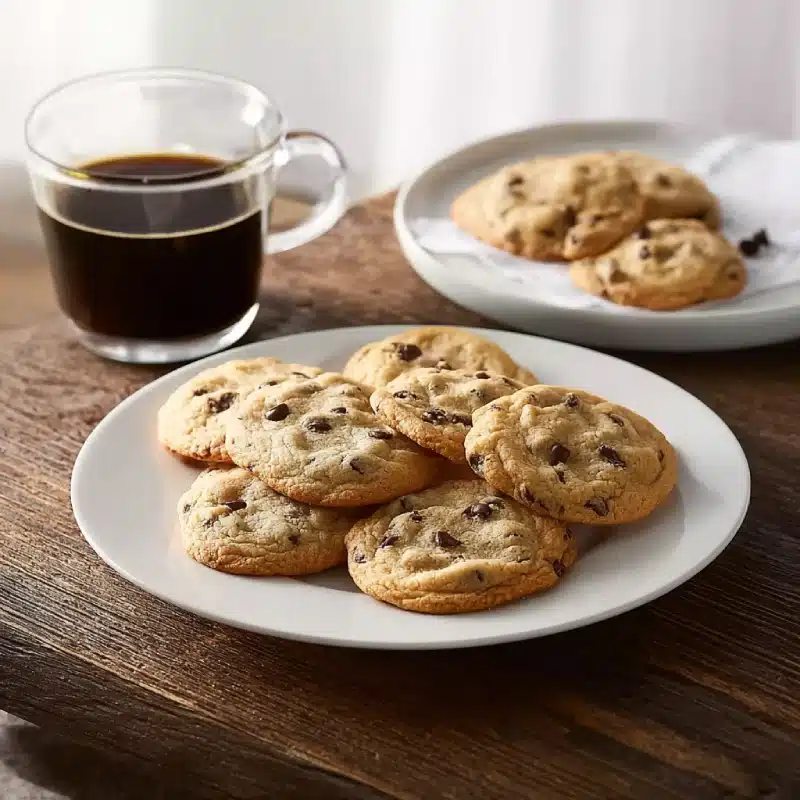
The Secret Behind the Perfect Chewy Texture
Achieving that elusive bakery-style texture—where the cookie bends slightly before breaking and melts in your mouth—isn’t magic; it is pure science. The difference between a crispy, snap-in-half disk and a soft, chewy masterpiece comes down to moisture retention and protein development.
To get this texture, we manipulate the dough to ensure it doesn’t dry out in the oven. By controlling the gluten formation (avoiding over-mixing) and precisely managing the moisture content through our fat and sugar choices, we create a cookie that stays tender for days, not just minutes after baking.
The Importance of the Butter-to-Sugar Ratio
The structural integrity of your cookie depends entirely on the relationship between the butter and the sugars. In this recipe, we use 2 sticks (1 cup) of unsalted butter, which provides the necessary fat to coat the flour proteins, preventing them from becoming too tough.
However, the real game-changer is the ratio. Unlike crispier recipes that rely heavily on granulated sugar, or cakey recipes that reduce sugar content, we use a specific high-sugar-to-fat ratio. This ensures the cookies spread just enough to create those golden, slightly crisp edges, while the butter keeps the crumb rich and dense. If you were to reduce the sugar, the cookies would puff up like muffins; increase it too much, and they would flatten into brittle lace. This recipe hits the mathematical “sweet spot” for chewiness.
Why Brown Sugar is the Key Ingredient
If there is one non-negotiable ingredient for soft cookies, it is light brown sugar. While white granulated sugar draws out moisture to create crispness, brown sugar does the exact opposite.
Brown sugar contains molasses, which is hygroscopic—meaning it actively absorbs and retains moisture from the air. This keeps the water content in your cookie higher during the baking process.
- The 2:1 Rule: We use 1 cup of packed light brown sugar against only ½ cup of granulated sugar. This 2:1 ratio is the secret weapon.
- Chemical Reaction: The acidity in the molasses reacts with the baking soda (not powder), creating carbon dioxide. This reaction gives the cookie a gentle lift without making it airy, resulting in that dense, fudge-like consistency that defines a truly chewy chocolate chip cookie.
Essential Ingredients for Soft Cookies
To replicate the iconic Martha Stewart-style cookie, accuracy is everything. While the list of ingredients seems standard, the specific types and temperatures of these ingredients play a massive role in the final texture. Here is exactly what you need and why.
Dry Ingredients & Leavening Agents
The foundation of this cookie relies on a precise balance of flour and leaveners.
- All-Purpose Flour: This recipe is optimized for standard all-purpose flour. It provides enough protein for structure but remains tender enough for a soft bite. Pro Tip: Measure your flour by spooning it into the cup and leveling it off, rather than scooping directly, to avoid a dry, cakey cookie.
- Baking Soda (Not Powder): This is crucial. We use baking soda because it requires an acid to activate. It reacts with the molasses in the brown sugar to create carbon dioxide. Unlike baking powder, which makes cookies puffy and cake-like, baking soda encourages the cookies to spread slightly and promotes browning, giving you those delicious golden edges.
- Kosher Salt: Never skip the salt. It doesn’t make the cookies salty; it counteracts the high sugar content and makes the chocolate flavor pop.
Wet Ingredients: Butter, Eggs, and Vanilla
The “wet” phase is where the texture is born.
- Unsalted Butter (Room Temperature): We use unsalted butter to have full control over the sodium level. Crucially, the butter must be at room temperature. If it is too cold, it won’t cream properly with the sugar; if it is melted, your cookies will be greasy and flat. You want it soft enough to leave a thumbprint, but not losing its shape.
- Large Eggs: Eggs provide structure and richness. Like the butter, these should be at room temperature to ensure they emulsify smoothly into the batter without curdling the fat.
- Pure Vanilla Extract: With a full teaspoon called for, avoid imitation vanilla. A high-quality pure extract provides the aromatic background that ties the butter and sugar together.
Choosing the Right Chocolate Chips
The chocolate isn’t just a mix-in; it constitutes a large portion of the cookie’s volume.
Semisweet vs. Milk Chocolate
For this specific recipe, Semisweet Chocolate is the gold standard. Because the dough itself is rich in brown sugar and very sweet, using milk chocolate (which has a high sugar content) can result in an overwhelmingly sweet cookie. Semisweet chocolate (usually around 40-60% cacao) provides a slightly bitter contrast that balances the caramel notes of the dough perfectly. If you prefer a more sophisticated, adult flavor, you can even opt for bittersweet (60%+ cacao).
Chips vs. Chopped Bars
Technically, you can use either, but they yield different results:
- Chocolate Chips: These contain stabilizers (like soy lecithin) that help them hold their shape at high temperatures. If you want classic, uniform bites of chocolate throughout the cookie, stick to chips.
- Chopped Baking Bars: If you want that “gourmet bakery” look with pools of melted chocolate and uneven shards, chop up a high-quality chocolate bar. Without the stabilizers, bar chocolate melts more thoroughly into the dough, creating a gooier center.
Step-by-Step Baking Instructions
Great cookies are not just about the ingredients; they are about technique. Follow this roadmap to ensure every batch comes out perfectly consistent.
Prepping Your Kitchen and Oven
Before you start mixing, set yourself up for success.
- Heat it up: Preheat your oven to 350°F (175°C). Ensure your oven racks are positioned in the upper and lower thirds of the oven. This allows you to bake two trays at once while ensuring even heat circulation.
- The Surface: Line two large baking sheets with parchment paper.
- Why Parchment? Unlike greasing the pan (which adds fat and causes spreading) or silicone mats (which can sometimes make bottoms slippery), parchment paper provides just enough grip to hold the cookie in place while preventing sticking.
The “Creaming” Method: Mixing Butter and Sugars
This is the most critical step in the entire recipe. You aren’t just mixing ingredients; you are mechanically forcing air into the dough.
- Combine: In the bowl of a stand mixer fitted with the paddle attachment, place your room-temperature butter, granulated sugar, and packed brown sugar.
- The Mix: Beat on medium-high speed for full 3 minutes. Set a timer if you have to.
- The Result: You are looking for a transformation. The mixture should go from yellow and gritty to pale, creamy, and fluffy. This aeration creates the structure that keeps the cookie soft later.
- Scrape Down: Halfway through, stop the mixer and scrape down the sides and bottom of the bowl to ensure no butter is stuck at the bottom.
Combining Dry and Wet Ingredients
Once the butter is aerated, we need to be gentle to preserve that texture.
- Liquids: Add the vanilla extract and the eggs one at a time, beating well after each addition until incorporated.
- Dry Ingredients: Reduce the mixer speed to Low. Gradually add the flour mixture (flour, baking soda, salt).
- The “Just Combined” Rule: Stop the mixer the moment you see the last streak of white flour disappear. Do not overmix. Overmixing activates the gluten in the flour, which will turn your soft cookies into tough, hard disks.
- Fold: Remove the bowl from the mixer and manually fold in the chocolate chips using a wooden spoon or spatula to ensure they are evenly distributed without crushing them.
Portioning and Spacing the Dough
Uniformity is key to even baking.
- Scoop: Use a small ice cream scoop or a rounded tablespoon to portion the dough. This ensures every cookie is the exact same size, meaning they will all finish baking at the same time.
- Space: Drop the dough onto the prepared baking sheets, spacing them about 2 inches apart. These cookies have a high butter content, so they will spread as they bake. If they are too close, they will merge into one giant cookie sheet.
Baking for Golden Edges and Soft Centers
The difference between a chewy cookie and a crispy one is often just 60 seconds in the oven.
- The Bake: Bake for 8 to 10 minutes.
- The Visual Check: You want the edges to be golden brown and set, but the centers should still look soft and slightly underbaked. Do not wait for the centers to look firm, or they will be hard by the time they cool.
- Carryover Cooking: Remove the baking sheets from the oven and set them on a wire rack. Let the cookies sit on the hot baking sheet for 2 minutes. They will continue to cook gently from the residual heat of the pan, setting up the structure without drying out. Finally, transfer them directly to the wire rack to cool completely.
Expert Tips for Foolproof Cookies
Even with the perfect recipe, small variables in the kitchen can change the outcome completely. Baking is chemistry, and precision is your best friend. Here are the professional secrets to ensuring your cookies turn out soft and chewy every single time.
Measuring Flour Correctly to Avoid Dryness
The number one reason cookies turn out hard, cakey, or dry is too much flour.
- The Scoop Mistake: If you dip your measuring cup directly into the flour bag and scoop, you are packing the flour down. This can add up to 30% more flour than the recipe calls for, drying out the dough.
- The Solution (Spoon & Level):
- Fluff the flour in the container with a spoon.
- Gently spoon the flour into your measuring cup until it’s heaping over the top.
- Use the back of a knife to level off the excess.
- The Pro Method: For absolute precision, use a digital kitchen scale. One cup of all-purpose flour should weigh approximately 120 to 125 grams. If you have a scale, use it!
Why Room Temperature Ingredients Matter
You might be tempted to use cold eggs or microwave your butter to speed things up—don’t do it.
- Emulsification: Room temperature butter (65°F – 70°F) traps air when beaten with sugar. This process, called aeration, creates a web of air bubbles that expand in the oven, giving the cookie lift and a tender crumb.
- The Cold Shock: If you add cold eggs to creamed butter, the fat will seize up and curdle, looking like cottage cheese. This breaks the emulsion and leads to a dense, flat cookie.
- Quick Fix: If you forgot to take your eggs out, place them in a bowl of warm (not hot) water for 5–10 minutes before using.
How to Prevent Cookies from Burning
Nothing is worse than a cookie that looks perfect on top but is black on the bottom.
- Trust the Thermometer, Not the Dial: Most ovens are off by 10-25 degrees. An inexpensive oven thermometer hanging inside is the only way to know the true temperature. If your oven runs hot, reduce the setting.
- Avoid Dark Pans: Dark-colored metal baking sheets absorb heat much faster than light-colored aluminum ones. This often burns the bottoms before the centers are cooked. Stick to light-colored, heavy-duty aluminum sheets.
- Rack Position: Ensure your racks are in the center or upper-third of the oven. The bottom rack is too close to the heating element and is a danger zone for cookies.
- The Parchment Barrier: Always line your pans with parchment paper. It acts as a thin insulator between the hot metal and the delicate dough, ensuring an even, golden bake.
Make-Ahead and Storage Guide
One of the best things about this recipe is how well it keeps. Whether you are baking for a crowd or just want to have emergency cookie dough on hand for a rainy day, here is how to maintain that fresh-from-the-oven quality.
How to Store Baked Cookies for Freshness
The enemy of a chewy cookie is air. If left exposed, moisture evaporates, turning your soft treat into a hard disc.
- Cool Completely: Before storing, ensure the cookies are 100% cool. If you seal them while they are still warm, the residual heat will create condensation (steam) inside the container, making the cookies soggy and prone to spoilage.
- Airtight is Right: Store cookies in an airtight container or a Ziploc bag with the air pressed out. They will stay fresh at room temperature for up to 1 week.
- The “Slice of Bread” Hack: If you want to keep your cookies extra soft for longer, place a slice of white sandwich bread inside the container with the cookies. The cookies will absorb moisture from the bread (which will turn hard as a rock), keeping your treats soft and chewy for days longer.
Freezing Cookie Dough for Later
Freezing dough is actually superior to freezing baked cookies. It allows you to have fresh, warm cookies on demand without the mess of making the dough from scratch every time.
Flash Freezing Technique
To prevent your dough balls from freezing into one giant, inseparable lump, use the “flash freeze” method:
- Scoop: Portion out your dough balls onto a parchment-lined baking sheet, just as if you were about to bake them. You can pack them close together since they won’t be spreading in the freezer.
- Freeze: Place the entire baking sheet in the freezer for 1 hour.
- Transfer: Once the balls are solid to the touch, transfer them into a freezer-safe zip-top bag or container.
- Label: Write the date and the baking temperature (350°F) on the bag. The dough will stay fresh for up to 3 months.
Baking Frozen Dough
The best news? You do not need to thaw the dough before baking.
- Preheat: Preheat your oven to 350°F (175°C).
- Arrange: Place the frozen dough balls on your baking sheet, spaced 2 inches apart.
- Adjust Time: Bake exactly as the recipe directs, but add 1 to 2 extra minutes to the baking time.
- Watch: Keep an eye on them; once the edges are golden, pull them out. They might look slightly taller than fresh-baked cookies, but they will settle as they cool.

The Best Soft and Chewy Chocolate Chip Cookies
- Total Time: 1 hr
- Yield: 36 cookies 1x
- Diet: Vegetarian
Description
These Soft and Chewy Chocolate Chip Cookies are better than a bakery. Made with plenty of brown sugar and butter for that perfect dense, fudge-like center and crisp golden edges. Easy to make in 20 minutes!
Ingredients
- 2 ¼ cups all-purpose flour
- ½ teaspoon baking soda
- 1 teaspoon kosher salt
- 1 cup (2 sticks) unsalted butter, softened to room temperature
- 1 cup light brown sugar, packed
- ½ cup granulated sugar
- 2 teaspoons pure vanilla extract
- 2 large eggs, room temperature
- 2 cups (12 oz) semisweet chocolate chips
Instructions
- Preheat & Prep: Preheat oven to 350°F (175°C). Line two large baking sheets with parchment paper.
- Mix Dry Ingredients: In a small bowl, whisk together the flour, baking soda, and salt. Set aside.
- Cream Butter & Sugars: In a stand mixer fitted with the paddle attachment, beat the softened butter, brown sugar, and granulated sugar on medium-high speed for 3 minutes until light, fluffy, and pale.
- Add Wet Ingredients: Add the vanilla extract and eggs, one at a time, beating well after each addition. Scrape down the sides of the bowl.
- Combine: Reduce speed to low. Gradually add the flour mixture and mix until just combined (do not overmix).
- Fold Chocolate: Stir in the chocolate chips using a wooden spoon or spatula.
- Scoop: Use a small ice cream scoop (about 1.5 tablespoons) to drop dough onto prepared baking sheets, spacing them 2 inches apart.
- Bake: Bake for 8–10 minutes, or until edges are golden brown but centers still look soft.
- Cool: Let cool on the baking sheet for 2 minutes, then transfer to a wire rack to cool completely.
Notes
- Measure Correctly: Spoon flour into the measuring cup and level it off to avoid dry cookies.
- Room Temp: Ensure butter and eggs are at room temperature for the best texture.
- Don’t Overbake: They should look slightly underdone in the middle when you take them out; they will firm up as they cool.
- Storage: Store in an airtight container at room temperature for up to 1 week.
- Prep Time: 20 mins
- Cook Time: 20 mins
- Category: Dessert
- Method: Baking
- Cuisine: American
Nutrition
- Serving Size: 1 Cookie
- Calories: 190 kcal
- Sugar: 18 g
- Sodium: 95 mg
- Fat: 10 g
- Saturated Fat: 6 g
- Unsaturated Fat: 3 g
- Trans Fat: 0 g
- Carbohydrates: 24 g
- Fiber: 1 g
- Protein: 2 g
- Cholesterol: 25 mg
Keywords: soft chocolate chip cookies, chewy cookies, homemade cookies, best chocolate chip recipe, bakery style
Can I Use Salted Butter Instead?
Yes, but with a modification.
Baking recipes typically call for unsalted butter because it gives you total control over the sodium level. Different brands of salted butter have varying amounts of salt, which can make the result unpredictable.
The Conversion: If you only have salted butter on hand, you can use it. However, you must reduce the added kosher salt in the recipe.
The Rule: For every stick (½ cup) of salted butter used, reduce the added salt by ¼ teaspoon. Since this recipe uses 2 sticks, reduce the salt by ½ teaspoon total.
Why Did My Cookies Spread Too Much?
If your cookies turned into flat, thin puddles that merged together, one of these three common culprits is likely to blame:
Butter Was Too Warm: If your butter was melted or significantly softer than room temperature before mixing, the dough will not hold air. This causes it to “slump” immediately in the oven before the structure sets.
Warm Baking Sheets: Never place fresh dough on a hot baking sheet from a previous batch. The heat will melt the fat instantly. Always let your sheets cool completely or run them under cold water (and dry them) between batches.
Too Little Flour: If you didn’t measure your flour correctly (see the Expert Tips section), the ratio of fat to structure is off. The butter melts, and there isn’t enough flour to hold it together.
What Does Baking Soda Do in This Recipe?
Baking soda (Sodium Bicarbonate) is a powerhouse in cookie chemistry. It serves two specific purposes in this recipe that Baking Powder cannot replicate:
Browning (The Maillard Reaction): Baking soda creates an alkaline environment, which promotes browning. This is what gives these cookies their deep, appetizing golden-brown color and slightly caramelized flavor.
Spread vs. Lift: Unlike baking powder (which creates a puffy, cake-like vertical rise), baking soda encourages the cookie to spread outward before it sets. This spreading action is crucial for achieving that dense, chewy texture rather than a fluffy, cakey crumb.