


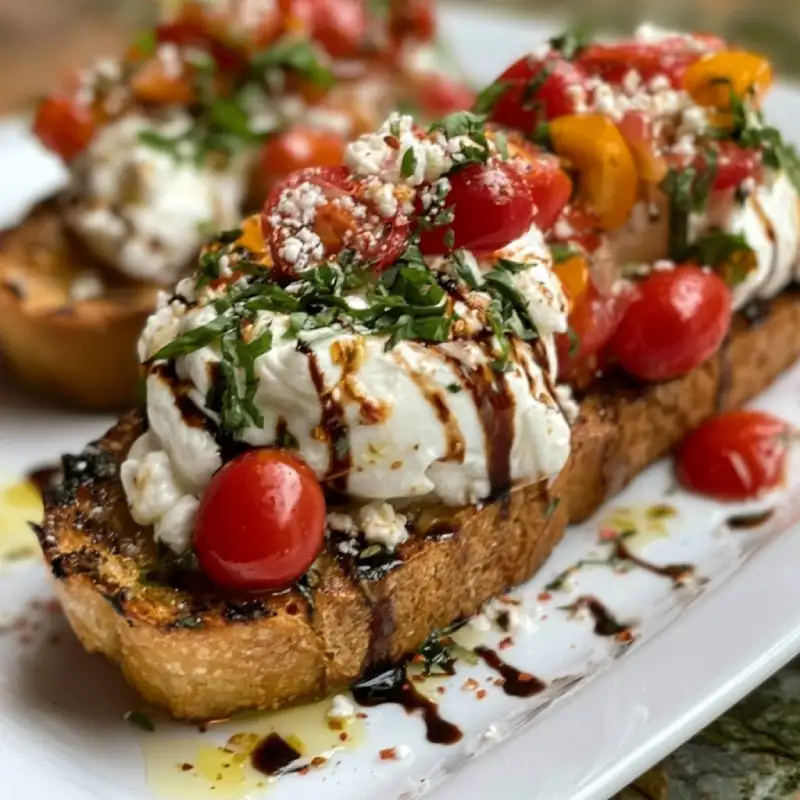
Experience the Unbeatable Combination: Why This Burrata Bruschetta Recipe is a Must-Make
Imagine a symphony of textures and flavors dancing on your palate: the satisfying crunch of perfectly toasted bread, followed by the creamy, luxurious melt of fresh burrata, all brightened by the juicy burst of ripe tomatoes and the aromatic whisper of basil. That, my friends, is the magic of Burrata Bruschetta, and it’s about to become your new favorite appetizer. This isn’t just any bruschetta; it’s an elevated experience that transforms simple ingredients into something truly extraordinary. If you’re looking to impress without breaking a sweat, this recipe is your secret weapon. It’s my absolute go-to dish for entertaining, and honestly, for treating myself to something utterly delicious after a long week!
Why This Burrata Bruschetta Recipe Hits All the Right Notes
- The Creamy-Crunchy Texture Contrast You Crave: The star here is the incredible interplay between the crisp, garlicky bread and the unbelievably soft, milky burrata. It’s a textural dream!
- Bursting with Fresh, Balanced Flavors: We’re talking peak-season tomatoes, fragrant basil, rich olive oil, and that unmistakable tang of garlic. Every bite is a harmonious blend.
- Incredibly Simple, Yet Impressively Elegant: Don’t let its sophisticated appearance fool you. This recipe is surprisingly straightforward, making it perfect for both novice and experienced home cooks.
- Adaptable for Any Season or Occasion: While it shines with summer tomatoes, you can adapt it year-round. It’s perfect for a casual weeknight snack, a sophisticated dinner party appetizer, or even a light lunch.
Ingredients Demystified: What You Need and Why It Matters
Here is what you need and why:
Burrata: Understanding Its Unique Creaminess and Why Regular Mozzarella Won’t Do: Ah, burrata! This isn’t just mozzarella; it’s mozzarella’s richer, creamier cousin. It’s an outer shell of solid mozzarella encasing a soft, creamy interior of stracciatella (shreds of mozzarella soaked in cream). When you break it open, that luscious, milky center spills out, creating an unparalleled texture that regular mozzarella simply can’t replicate. It’s the heart and soul of our Burrata Bruschetta.
Tomatoes: Choosing the Right Variety for Optimal Sweetness and Acidity: The quality of your tomatoes can make or break your bruschetta. Look for ripe, flavorful varieties like Roma, heirloom, or even sweet cherry or grape tomatoes. They should be firm but yield slightly to pressure, with a vibrant color and a sweet, earthy aroma. Avoid pale, mealy tomatoes at all costs!
Good Bread: The Foundation of Excellent Bruschetta – Selecting the Best Loaf: A sturdy, crusty bread is essential. A good quality baguette, ciabatta, or a rustic Italian loaf works wonderfully. You want something that can hold up to toasting and won’t get soggy too quickly. Avoid soft sandwich bread.
Fresh Basil: The Aromatic Finisher and Its Role in Flavor Balance: Fresh basil adds a beautiful, peppery, slightly sweet aroma and flavor that perfectly complements the tomatoes and burrata. Always use fresh; dried basil won’t give you the same vibrant results.
Quality Olive Oil: More Than Just a Fat – Enhancing Flavor and Texture: This is not the time to skimp! A good extra virgin olive oil adds a fruity, peppery note and a silky mouthfeel. It’s crucial for both toasting the bread and drizzling over the finished product.
Garlic: The Essential Aromatic and How to Infuse Its Flavor: Garlic provides that classic, pungent kick that defines bruschetta. We’ll be rubbing raw garlic on the toasted bread, which infuses a potent, fresh flavor without being overwhelming.
Salt and Pepper: Seasoning for Maximum Impact: Simple but vital. Flaky sea salt and freshly ground black pepper enhance all the other flavors, bringing them into perfect harmony.
Optional Add-ins: Elevating Your Bruschetta Further (Balsamic Glaze, Honey, Prosciutto): Feel free to get creative! A drizzle of balsamic glaze adds a lovely sweet-tart note, a touch of honey can balance acidity, and thin slices of prosciutto can introduce a salty, savory element. For more baking inspiration, see more easy recipes.
Your Step-by-Step Guide to Perfect Burrata Bruschetta
Follow these step-by-step photos:
1. Preparing Your Tomatoes for Peak Flavor
Dice your ripe tomatoes into small, even pieces. Place them in a bowl and season generously with flaky sea salt and freshly ground black pepper. A little secret: let them sit for at least 10-15 minutes. This draws out their natural juices and concentrates their flavor, creating a more vibrant topping. You can also add a tiny drizzle of olive oil and a few torn basil leaves here.
2. Toasting the Bread to Golden Perfection
Preheat your oven to 375°F (190°C). Slice your chosen bread into 1/2-inch thick pieces. Arrange them on a baking sheet. Drizzle lightly with good quality extra virgin olive oil – remember, less is more here for optimal crunch! Bake for 8-12 minutes, or until golden brown and crisp. Keep a close eye on them to prevent burning.
3. Infusing Garlic Flavor into Your Toasts
Once the bread is out of the oven and still warm, take a peeled clove of garlic and rub it vigorously over the surface of each toasted slice. The warmth of the bread will help release the garlic’s aromatic oils, infusing a wonderful, subtle garlic flavor without being overpowering. You’ll smell it immediately!
4. Assembling Your Bruschetta with Burrata
Now for the star! Spoon a generous amount of your seasoned tomato mixture onto each garlic-rubbed toast. Next, gently tear or slice pieces of burrata and place them on top of the tomatoes. Don’t be shy; you want that creamy goodness to shine!
5. The Final Touches: Basil and Seasoning
Finish your Burrata Bruschetta with a scattering of fresh basil leaves, either torn or thinly sliced (chiffonade). Drizzle with a final touch of your best extra virgin olive oil. If desired, add a sprinkle of flaky sea salt and a grind of fresh black pepper. If using, a swirl of balsamic glaze or a thin slice of prosciutto can be added now. Serve immediately!
Expert Tips for Bruschetta Brilliance
- Don’t Over-Oil the Bread: Why Less is More for Optimal Crunch: A light drizzle is all you need. Too much oil will make the bread greasy and prevent it from getting truly crisp.
- Garlic Rubbing Technique: Maximizing Flavor Without Overpowering: Rub the garlic on the warm bread. The heat helps the garlic oils penetrate the toast, giving you a deep flavor without the harshness of raw chopped garlic.
- Serving Immediately: The Key to Crunchy Bread and Creamy Burrata: Bruschetta is best enjoyed fresh. The longer it sits, the more the bread will absorb moisture from the tomatoes and burrata, losing its delightful crunch.
- Temperature Matters: Serving Burrata at Room Temperature for Best Texture: Take your burrata out of the fridge about 30 minutes before assembling. This allows its creamy interior to soften and become perfectly luscious.
- Seasoning Your Tomatoes First: A Secret to Deeper Flavor: Don’t skip seasoning the tomatoes and letting them sit. This simple step draws out their natural sweetness and creates a more flavorful topping.
What to Serve With Your Burrata Bruschetta
This versatile dish can fit into many meal plans!
- Pairing with Wines: Complementary Choices for a Light Meal: A crisp, dry white wine like Sauvignon Blanc or Pinot Grigio would be delightful. A light-bodied rosé also pairs beautifully with the fresh flavors.
- As an Appetizer: Ideal Companions for a Multi-Course Meal: Serve it alongside a fresh green salad, a light pasta dish, or grilled chicken or fish for a balanced meal. It’s also fantastic as part of a larger antipasto platter.
- Making it a Meal: Simple Additions for a Light Lunch: For a more substantial lunch, add some grilled chicken or shrimp on the side, or serve it with a hearty minestrone soup.
Storing and Reheating Best Practices
- Can You Make It Ahead? Tips for Partial Prep: You can definitely prep components ahead! Dice and season your tomatoes (store in the fridge), and toast your bread (store in an airtight container at room temperature). Keep the burrata in its brine in the fridge. Assemble just before serving.
- Storing Leftovers: How to Maintain Quality: Leftover assembled bruschetta will get soggy. It’s best to store any leftover components separately. Keep seasoned tomatoes in an airtight container in the fridge for up to 2 days. Store burrata in its liquid.
- Reheating Considerations: What Works (and What Doesn’t): Reheating assembled bruschetta is not recommended as the bread will be soggy and the burrata will lose its delicate texture. It’s truly a dish meant to be enjoyed fresh.
Frequently Asked Questions About Burrata Bruschetta
What’s the difference between burrata and mozzarella?
While both are Italian cheeses made from cow’s milk, burrata is essentially a fresh mozzarella shell filled with a creamy mixture of stracciatella (shreds of mozzarella) and cream. This gives burrata a much softer, richer, and more luxurious interior compared to the more uniformly firm texture of fresh mozzarella. Can I use cherry tomatoes instead of larger ones?
Absolutely! Cherry or grape tomatoes are excellent for bruschetta. They are often sweeter and have less water content, which can be a plus. Just halve or quarter them depending on their size. How do I prevent the bread from getting soggy?
The key is to toast the bread until it’s very crisp and to assemble the bruschetta just before serving. Also, ensure your tomatoes are well-drained after seasoning, as excess liquid can contribute to sogginess. Don’t over-oil the bread during toasting. Is balsamic glaze necessary?
No, balsamic glaze is entirely optional. The Burrata Bruschetta is delicious on its own. However, a drizzle of balsamic glaze can add a lovely sweet and tangy counterpoint that many people enjoy. You can buy it pre-made or reduce balsamic vinegar yourself. Can I grill the bread instead of baking/toasting?
Yes, grilling the bread is a fantastic alternative! It adds a wonderful smoky flavor and beautiful grill marks. Brush the bread lightly with olive oil and grill over medium heat for 1-2 minutes per side, until golden and crisp. Then proceed with rubbing garlic. For more grilling tips, check out Food Network’s grilling guides.