


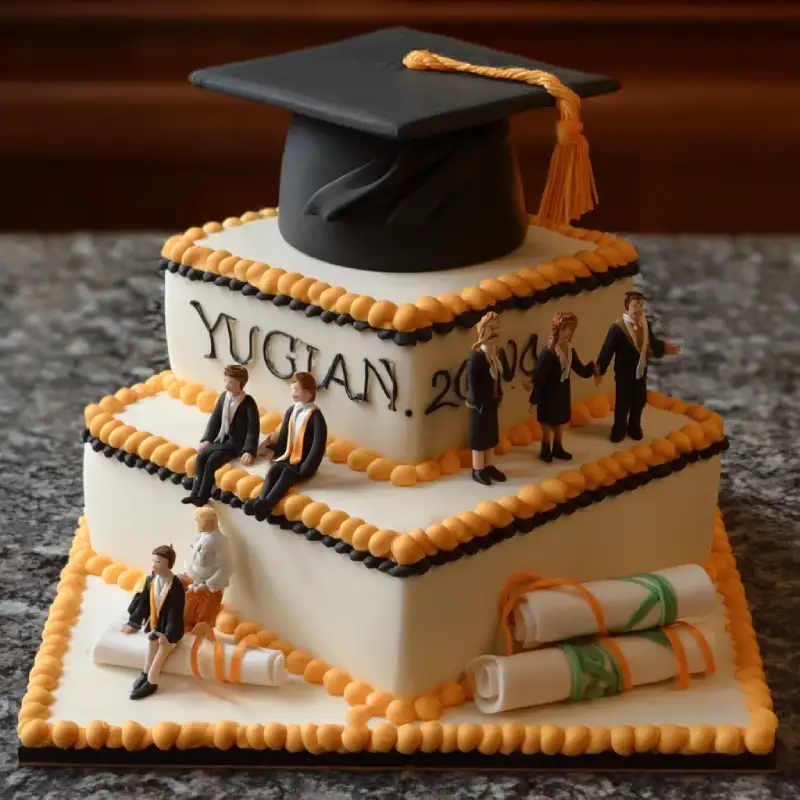
Graduation Cake: Your Celebration Starts Here
Imagine the smiles, the cheers, and that incredible moment when you bite into a slice of pure celebratory bliss. This isn’t just any cake; it’s *the* Graduation cake – a moist, tender crumb bursting with rich flavor, elegantly frosted and ready to mark a momentous achievement. Its delicate texture and balanced sweetness make every forkful a memorable experience, symbolizing all the hard work and joy that led to this special day. Whether you’re baking for your own graduate or for someone you cherish, this recipe adds that personal, heartfelt touch that no store-bought cake ever can. Looking for more delightful bakes? See more good recipes here !
Forget complicated techniques and frustrating failures. My promise to you is the easiest, most impressive Graduation cake you’ll ever bake. This recipe is designed for success, regardless of your baking background. It delivers on both taste and stunning presentation, ensuring your graduate feels truly celebrated.
Table of Contents
- Graduation Cake: Your Celebration Starts Here
- Why This Graduation Cake Recipe Works
- Ingredients and Smart Substitutions
- Step-by-Step Graduation Cake Instructions
- Expert Tips for a Flawless Graduation Cake
- What to Serve with Your Graduation Cake
- Storing and Reheating Your Graduation Cake
- Graduation Cake FAQs
Why This Graduation Cake Recipe Works
- Incredibly Moist & Tender: We use specific techniques and ingredients to guarantee a cake that stays tender and moist for days, not just hours.
- Rich, Balanced Flavor Profile: A perfect blend of classic vanilla and a hint of almond ensures a sophisticated taste that’s universally loved, without being overly sweet.
- Sturdy for Decorating: This cake bakes up with a fantastic structure, making it ideal for stacking, carving, and decorating with confidence – perfect for that cap and gown design!
- Approachable for All Skill Levels: From novice bakers to seasoned pros, the clear, concise steps and helpful tips make this a foolproof recipe for a show-stopping Graduation cake.
Ingredients and Smart Substitutions
Here is what you need and why:
All-purpose flour: The foundation of our cake’s structure. I recommend using unbleached all-purpose flour for consistent results. For a slightly finer, more delicate crumb, you could substitute cake flour, but you’ll need to measure by weight as cake flour is lighter.
Granulated sugar: Provides essential sweetness, adds moisture, and contributes to the beautiful golden crust through caramelization. There’s no direct substitute here for the cake structure.
Fats: Tenderness and Richness (Unsalted Butter vs. Oil): We’re using unsalted butter for its unparalleled flavor. It contributes richness and a beautiful tender crumb. Ensure it’s at room temperature for proper creaming. While oil can make a very moist cake, it lacks the complex flavor of butter. If you must substitute, a neutral oil like vegetable or canola could work, but reduce the amount slightly.
Leavening: The Lift You Need (Baking Soda & Powder): This recipe employs both baking soda and baking powder to give our cake that perfect rise and airy texture. Baking soda reacts with acids (like buttermilk) and baking powder works independently. Ensure both are fresh for optimal lift.
Liquids: Hydration and Activation (Buttermilk vs. Milk + Acid): Buttermilk is key to this cake’s moisture and tender crumb, as its acidity reacts with the baking soda. If you don’t have buttermilk, you can easily make your own by adding 1 tablespoon of white vinegar or lemon juice to regular milk (dairy or non-dairy), letting it sit for 5-10 minutes until it curdles slightly, then using it as directed. For more baking substitutions, check out Food Network’s guide.
Eggs: Binding and Emulsifying: Eggs are crucial for binding the ingredients together, adding richness, and contributing to the cake’s structure and moisture. Large eggs, at room temperature, are best. They also act as an emulsifier, helping to create a smooth batter.
Flavorings: Extracts and Zests (Vanilla, Almond): Pure vanilla extract is a must for classic cake flavor. A touch of almond extract elevates the taste beautifully, complementing the vanilla. You can adjust the amount of almond or omit it entirely if preferred.
Buttercream Essentials: Confectioners’ Sugar, Butter, Cream: For the frosting, you’ll need high-quality unsalted butter (room temperature is non-negotiable!), sifted confectioners’ sugar for a smooth finish, and heavy cream or whole milk for pliability and richness. A dash of vanilla and almond extract ties the flavors together.
Step-by-Step Graduation Cake Instructions
Follow these easy steps to bake your perfect Graduation cake:
1. Prep Your Pans: The Non-Stick Method
Grease and flour your cake pans thoroughly. For extra assurance, line the bottoms with parchment paper. This creates a non-stick barrier, ensuring your beautiful cakes release perfectly without tearing. Don’t skip this step!
2. Combine Dry Ingredients: Even Distribution is Key
In a medium-sized bowl, whisk together the flour, granulated sugar, baking powder, baking soda, and salt. Whisking ensures all the leavening agents and salt are evenly distributed, leading to an even rise and perfectly balanced flavor throughout your cake.
3. Cream Wet Ingredients: Light and Fluffy Base
In a large mixing bowl, beat your softened room-temperature butter until creamy. Gradually add the granulated sugar, beating on medium-high speed for 3-5 minutes until the mixture is light in color and fluffy. This aeration is crucial for a tender cake. Beat in the eggs one at a time, incorporating each fully before adding the next, then stir in the vanilla and almond extracts.
4. Alternate Dry and Wet: Proper Mixing Technique
With your mixer on low speed, gradually add about one-third of the dry ingredients to the creamed butter mixture, followed by half of the buttermilk. Repeat this, then finish with the remaining dry ingredients. Mix just until combined and no streaks of flour remain. Do not overmix! Overmixing develops the gluten too much, leading to a tough cake.
5. Baking Time and Doneness: How to Check
Divide the batter evenly among your prepared cake pans. Bake in a preheated oven (check specific temperature in the recipe card) until a wooden skewer or toothpick inserted into the center comes out clean or with moist crumbs attached. The top should be golden brown and spring back when lightly touched.
6. Cooling Properly: Essential for Assembly
Allow the cakes to cool in their pans on a wire rack for 10-15 minutes. This helps them firm up before you attempt to invert them. After this initial cooling, invert the cakes onto the wire rack and remove the parchment paper. Let them cool completely before frosting – warm cakes will melt your buttercream!
7. Making the Buttercream: Smooth and Pipeable
In a large bowl, beat softened unsalted butter until creamy. Gradually add sifted confectioners’ sugar, a little at a time, alternating with splashes of heavy cream, until smooth and spreadable. Add vanilla and almond extracts. If it’s too thick, add more cream; if too thin, add more sugar. Beat until light and fluffy.
8. Assembling the Cake: Leveling and Stacking
Once your cake layers are completely cool, use a serrated knife to level any domed tops. Place the first layer on your cake stand or serving platter. Spread an even layer of buttercream, then top with the next cake layer. Repeat until all layers are stacked.
9. Decorating Tips: Achieving that Graduation Look
Start with a thin ‘crumb coat’ of frosting all over the cake to lock in any loose crumbs. Chill for 15-20 minutes. Then apply your final layer of buttercream. Use piping bags with various tips to create borders, a mortarboard design, or even edible paper decorations representing achievement.
Expert Tips for a Flawless Graduation Cake
- Room Temperature Ingredients: Why It Matters: Ensure butter, eggs, and buttermilk are at room temperature. They emulsify better, creating a smoother, more uniform batter and a finer crumb. Cold ingredients can lead to a lumpy batter and a dense cake.
- Don’t Overmix: The Enemy of Tender Cake: Mix the batter only until just combined. Overmixing develops gluten, which results in a tough, chewy cake. As soon as you no longer see streaks of flour, stop mixing.
- Calibrate Your Oven: Even Baking: Oven temperatures can vary significantly. Use an oven thermometer to ensure your oven is truly at the temperature you set. This prevents under- or over-baking and ensures consistent results.
- Use a Scale: Precision for Success: For consistent and professional-level results, weigh your flour and other dry ingredients. Volume measurements (cups) can be inaccurate due to packing differences.
- Crumb Coat First: Your Secret to Smooth Frosting: Apply a very thin layer of frosting all over the cake (the crumb coat) and chill it briefly. This seals in any loose crumbs, preventing them from mixing into your final, pristine layer of frosting.
- Piping Basics: Simple Decorations for Impact: Even simple piping can make a huge difference. Start with basic techniques for borders, rosettes, or lettering. Practice on parchment paper first!
What to Serve with Your Graduation Cake
While this Graduation cake is a star on its own, a few accompaniments can elevate the celebration:
- Fresh Berries and Cream: A bowl of fresh, vibrant berries (strawberries, raspberries, blueberries) and a dollop of lightly sweetened whipped cream provide a lovely counterpoint to the richness of the cake.
- Coffee or Tea: A good quality brewed coffee or an assortment of herbal teas offers a comforting pairing.
- Sparkling Cider or Champagne: For an extra festive touch, serve your cake with chilled sparkling cider or, for adults, champagne to toast to the graduate’s success.
Storing and Reheating Your Graduation Cake
Proper storage is essential to keep your masterpiece fresh and delicious for days after the celebration!
- Room Temperature Storage: Short Term: If your cake is covered in buttercream and will be consumed within 1-2 days, it can be stored at cool room temperature (below 70°F/21°C) in an airtight cake carrier or under a cake dome. This helps prevent it from drying out.
- Refrigerator Storage: Longer Term: For longer storage, or if your frosting contains perishable ingredients, refrigerate the cake. Place the cake in an airtight container or cover it loosely with plastic wrap. It will keep for up to 5-7 days.
- Freezing Leftovers: Preserve Freshness: To freeze individual slices or an entire leftover cake, wrap it tightly in plastic wrap, then an additional layer of aluminum foil. This will protect it from freezer burn. It can be frozen for up to 2-3 months.
- Thawing and Serving: Best Practices: For refrigerated cake, remove it from the fridge at least an hour (or up to 3 hours for a whole cake) before serving to allow it to come to room temperature. This significantly improves the flavor and texture of the cake and frosting. Thawed frozen cake should also be brought to room temperature before serving.
Graduation Cake FAQs
Can I make this cake ahead of time?
Absolutely! You can bake the cake layers up to 2-3 days in advance. Once completely cooled, wrap them tightly in plastic wrap and store at room temperature or freeze them. The buttercream can also be made 2-3 days ahead and stored in the refrigerator; just bring it to room temperature and re-whip before frosting. How do I prevent my cake from sticking to the pan?
Grease your pans thoroughly with butter or baking spray, then flour them, tapping out any excess. For an extra layer of protection, line the bottoms with parchment paper cut to size. This combination ensures your cakes release beautifully. What’s the best way to transport a decorated cake?
For decorated cakes, a sturdy cake carrier is your best friend. If you don’t have one, place the cake on a non-slip mat in a box slightly larger than the cake. Ensure the box is secure and place it on a flat surface in your car (e.g., the floor of the passenger seat or trunk). Avoid placing it on a seat where it might slide. Can I use a different frosting?
Yes! While classic buttercream is recommended for ease and stability, you could certainly experiment. Cream cheese frosting would add a tangy richness, or a Swiss or Italian meringue buttercream would offer a lighter, less sweet alternative. Just ensure your chosen frosting is stable enough for decorating. How much cake do I need for X guests?
A standard two-layer 8-inch round cake typically serves 12-16 people. A two-layer 9-inch round cake serves 14-18. If you’re feeding a larger crowd, consider baking two cakes or increasing the recipe to make a larger sheet cake.