


Table of Contents
- Introduction: Your New Go-To Pancake Recipe
- Why This Recipe Works
- Ingredients and Smart Substitutions
- How to Make Homemade Buttermilk Pancakes
- Expert Tips for Pancake Perfection
- What to Serve With Your Homemade Buttermilk Pancakes
- Storing and Reheating Your Pancakes
- Frequently Asked Questions About Buttermilk Pancakes
Introduction: Your New Go-To Pancake Recipe
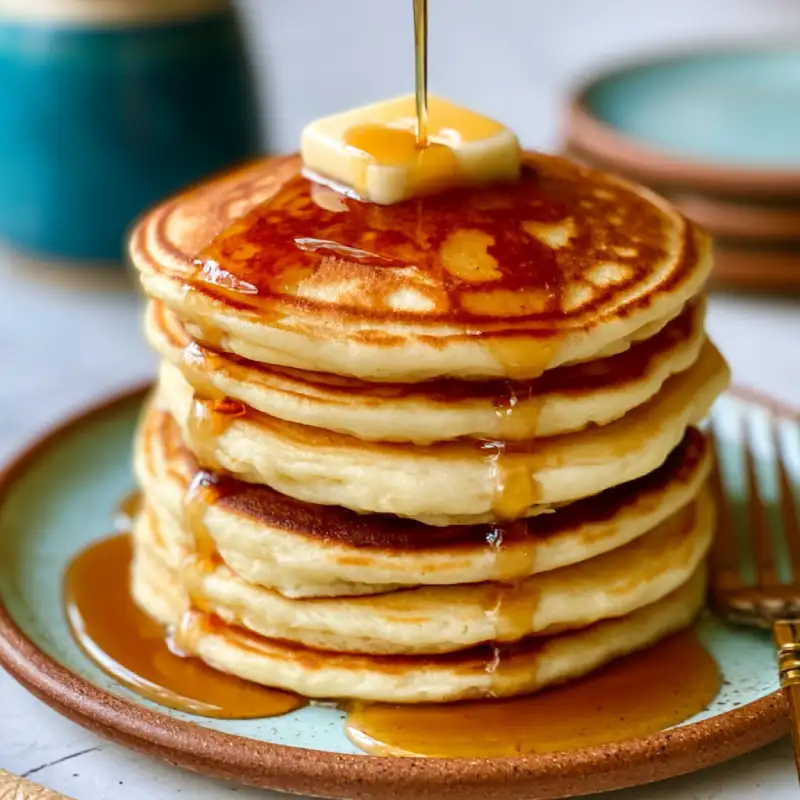
There’s nothing quite like waking up to the aroma of freshly made, fluffy pancakes. That perfect stack, golden brown with crisp edges and an unbelievably tender interior, beckons you to grab a fork and dive in. If you’ve been searching for that ideal breakfast experience, your quest ends here. This homemade Buttermilk Pancakes recipe isn’t just another set of instructions; it’s a revelation. It will quickly become a cherished family favorite, a weekend ritual, and your personal benchmark for pancake perfection. Forget dry, dense hockey pucks – we’re talking heavenly pillows of goodness! And for more amazing culinary adventures, See more easy recipes on my blog.
Why This Recipe Works
- The Buttermilk Advantage: The star ingredient not only imparts a subtle, tangy flavor but its acidity reacts beautifully with baking soda, ensuring an incredibly light and tender crumb.
- Perfect Leavening Balance: We use both baking soda and baking powder to create a consistent, irresistible rise, giving these pancakes their signature fluffiness.
- Gentle Mixing Philosophy: I’ll show you why a few lumps in your batter are actually a sign of coming success, preventing tough pancakes and preserving that delicate texture.
- Melted Butter Magic: Incorporating melted butter directly into the batter adds moisture and richness that truly elevates the flavor profile.
Ingredients and Smart Substitutions
Here is what you need and why:
All-Purpose Flour: This is the foundation of our pancakes. I always recommend using unbleached all-purpose flour for the best texture and flavor. While you can experiment with different flours, for classic fluffy buttermilk pancakes, all-purpose is your best bet. Avoid using self-rising flour as it contains leavening agents that are already accounted for in this recipe.
Buttermilk: The true hero! Buttermilk provides that essential tang and reacts with baking soda to create those wonderful air pockets. If you don’t have buttermilk on hand, don’t despair! You can easily make your own DIY buttermilk substitute: simply add 1 tablespoon of white vinegar or lemon juice to a measuring cup, then fill the rest of the way to 1 cup with whole milk. Let it sit for 5-10 minutes until it slightly curdles. Voila, instant buttermilk!
Baking Soda & Baking Powder: This dynamic duo is responsible for the incredible rise and fluffiness. Baking soda reacts with the acidity of the buttermilk, while baking powder provides extra lift, ensuring consistently light pancakes. Ensure your leavening agents are fresh for optimal results – test them by adding a little water to baking soda (should bubble) and hot water to baking powder (should bubble).
Eggs: Eggs act as a binder, adding richness and helping to hold the pancakes together. They also contribute to the golden-brown color. For the best incorporation, ensure your eggs are at room temperature.
Melted Butter: Instead of just greasing the griddle, melted butter in the batter adds a luxurious depth of flavor and moisture, preventing dry pancakes. Use unsalted butter to control the overall saltiness of the recipe.
Granulated Sugar: Just a touch of sugar enhances the sweetness and aids in browning, giving your homemade Buttermilk Pancakes that beautiful golden hue. It’s not just for sweetness; it’s a flavor enhancer.
Salt: A crucial ingredient that balances the sweetness and brings out all the other flavors. Don’t skip it!
How to Make Homemade Buttermilk Pancakes
Follow these step-by-step photos:
1. Prepare Dry and Wet Ingredients Separately
In a large bowl, whisk together your flour, granulated sugar, baking powder, baking soda, and salt until well combined and there are no lumps. In a separate medium bowl, whisk together the buttermilk, eggs, and melted butter until smooth. This separation ensures uniform distribution of leavening and fat, which is key for fluffy pancakes.
2. Combine Gently and Rest the Batter
Pour the wet ingredients into the dry ingredients. Mix gently with a whisk or rubber spatula until just combined. A few lumps are perfectly normal and actually desirable – overmixing develops gluten, leading to tough pancakes. Once mixed, let the batter rest for 5-10 minutes. This allows the flour to fully hydrate and the leavening agents to begin their work, resulting in a lighter pancake.
3. Preheat Griddle and Cook
Heat a lightly greased non-stick griddle or cast-iron pan over medium-low heat. A good test for temperature is to drop a tiny bit of water on the griddle – it should sizzle and evaporate within a second or two. Pour about 1/4 cup of batter per pancake onto the hot griddle. Give them space to spread.
4. Flip and Finish
Cook for 2-3 minutes on the first side, or until bubbles appear on the surface and the edges look set and slightly dry. Carefully flip the pancakes with a spatula and cook for another 1-2 minutes on the second side, until golden brown and cooked through. Repeat with the remaining batter, adjusting heat as needed. Keep cooked pancakes warm on a baking sheet in a low oven (around 200°F) while you finish the batch.
Expert Tips for Pancake Perfection
- Don’t Overmix! Lumps are Your Friends: Seriously, this is the golden rule. Overmixing develops gluten, leading to chewy, dense pancakes instead of light and fluffy ones. Mix until just combined, even if there are a few streaks of flour.
- Griddle Temperature is Key: Too hot and your pancakes will burn on the outside before cooking through; too cool and they’ll be pale and greasy. Aim for medium-low heat. Test with a drop of water – it should sizzle and evaporate.
- Adjust Batter Consistency if Needed: The ideal batter should be thick but pourable. If it seems too thick after resting, you can add a tablespoon or two of milk until it reaches the desired consistency.
- The First Pancake is a Practice Run: Don’t get discouraged if your first pancake isn’t perfect. This one helps you gauge the griddle temperature and batter consistency. Embrace it as the trailblazer for a perfectly delicious stack!
- Measure Flour Correctly: For consistent results, spoon your flour into the measuring cup and then level it off with a straight edge. Dipping the cup directly into the flour can compact it, leading to too much flour and a dry batter.
- King Arthur Baking has some fantastic resources on baking fundamentals, too!
What to Serve With Your Homemade Buttermilk Pancakes
While these homemade Buttermilk Pancakes are absolutely divine on their own, a few additions can elevate them to an unforgettable breakfast experience:
- Classic Maple Syrup and Butter: The undisputed champion. A generous slab of softened butter that melts into every pore, followed by a luxurious drizzle of real maple syrup.
- Fresh Berries and Whipped Cream: Piled high with seasonal berries like strawberries, blueberries, or raspberries, and topped with a cloud of freshly whipped cream for a sweet, refreshing contrast.
- Savory Pairings: Don’t shy away from contrasting sweet with savory! Crispy bacon, savory sausage patties, or even a fried egg make for a well-rounded and satisfying meal alongside your fluffy pancakes.
- Powdered Sugar and Lemon Zest: A simple dusting of powdered sugar and a grating of fresh lemon zest can add a beautiful bright note.
Storing and Reheating Your Pancakes
Making a big batch of homemade Buttermilk Pancakes is a fantastic idea for meal prep! Here’s how to store and reheat them properly to maintain their deliciousness:
- Cool Completely: Before storing, ensure your pancakes are completely cooled on a wire rack. Stacking them while warm will create condensation, making them soggy.
- Refrigerator Storage: Place cooled pancakes in an airtight container or a large zip-top bag with parchment paper between layers to prevent sticking. They will keep well in the refrigerator for 2-3 days.
- Freezing for Make-Ahead Convenience: Lay cooled pancakes in a single layer on a baking sheet and freeze for about 30 minutes until firm. This prevents them from sticking together. Then, transfer them to a freezer-safe zip-top bag or airtight container, again using parchment paper between layers. They can be frozen for up to 2-3 months.
- Reheating Methods:
- Toaster: This is my favorite method for a single pancake! Pop a frozen or refrigerated pancake into a toaster or toaster oven until lightly crispy and heated through.
- Oven: Preheat oven to 350°F (175°C). Place pancakes in a single layer on a baking sheet, cover loosely with foil, and heat for 8-10 minutes (5-7 minutes for refrigerated) until warmed through.
- Microwave: For a quick reheat, place 1-2 pancakes on a microwave-safe plate and heat for 20-30 seconds per pancake, or until warm. Be careful not to over-microwave, as this can make them rubbery.
Frequently Asked Questions About Buttermilk Pancakes
Can I use regular milk instead of buttermilk?
What if my pancakes aren’t fluffy?
How do I prevent pancakes from sticking to the griddle?
Can I add mix-ins to the batter?
Homemade Buttermilk Pancakes
- Total Time: 30 minutes
- Yield: 12 pancakes 1x
Description
Fluffy, tender, and perfectly golden, these homemade buttermilk pancakes are the ultimate breakfast treat. This recipe is simple to follow and guarantees a delicious, crowd-pleasing stack every time.
Ingredients
- 2 cups (240g) All-Purpose Flour
- 2 tablespoons Granulated Sugar
- 2 teaspoons Baking Powder
- 1 teaspoon Baking Soda
- 1/2 teaspoon Salt
- 2 large Eggs, room temperature
- 1 3/4 cups (420ml) Buttermilk (or DIY substitute: 1 3/4 cups milk + 1 3/4 tablespoons white vinegar/lemon juice)
- 4 tablespoons (56g) Unsalted Butter, melted and slightly cooled
Instructions
- In a large bowl, whisk together flour, sugar, baking powder, baking soda, and salt.
- In a separate medium bowl, whisk together buttermilk, eggs, and melted butter.
- Pour the wet ingredients into the dry ingredients. Mix gently with a whisk or rubber spatula until just combined. A few lumps are okay and desired. Do not overmix.
- Let the batter rest for 5-10 minutes at room temperature.
- Heat a lightly greased non-stick griddle or cast-iron pan over medium-low heat.
- Pour about 1/4 cup of batter per pancake onto the hot griddle.
- Cook for 2-3 minutes, until bubbles appear on the surface and edges look set.
- Flip and cook for another 1-2 minutes, until golden brown and cooked through.
- Serve immediately with your favorite toppings or keep warm in a low oven.
- Prep Time: 10 mins
- Cook Time: 20 mins