


Table of Contents
- Introduction: Capturing Spring’s Essence
- How This Fresh Dandelion Jelly Recipe Works
- Ingredients & Smart Substitutions
- Step-by-Step: Making Your Dandelion Jelly
- Expert Tips for Dandelion Jelly Success
- Serving Suggestions: Beyond Toast
- Storing & Reheating Dandelion Jelly
- Frequently Asked Questions About Dandelion Jelly
Introduction: Capturing Spring’s Essence
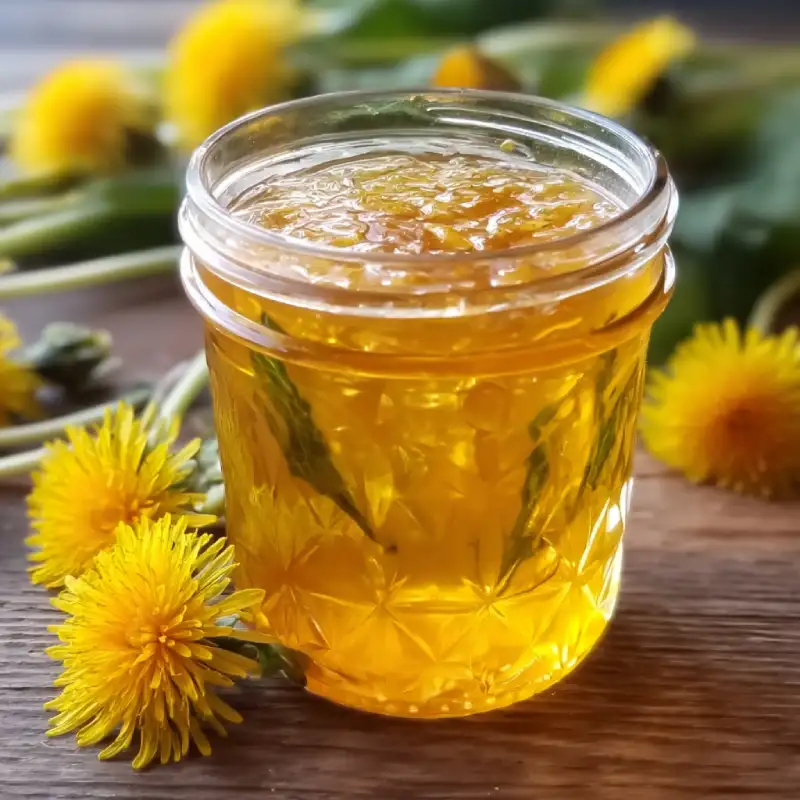
Imagine a spread that tastes like pure sunshine and the sweet whisper of spring. That, my friends, is exactly what a good batch of Fresh Dandelion Jelly delivers! It boasts a delicate, honey-like flavor with subtle floral notes, reminiscent of early spring meadows. Its vibrant, golden hue is as pretty as it is delicious, and the texture? Perfectly set, glistening, and spreadable on anything from hot toast to fresh scones. This isn’t just a recipe; it’s an experience, a delightful way to bottle the ephemeral beauty of the season. If you love discovering unique and delicious homemade treats, you’re in the right place! For even more fantastic kitchen adventures, you can See more easy recipes.
A Taste of Nostalgia: Why Dandelion Jelly?
For many, dandelions are just weeds. But for those of us who grew up foraging or hearing tales of old-world remedies, they represent so much more. Dandelion jelly taps into that sense of nostalgia, transforming a humble backyard flower into a gourmet delight. It’s an act of culinary creativity, turning the overlooked into the extraordinary.
Simple Joys: Your Spring Tradition Awaits
Making Fresh Dandelion Jelly is more than just cooking; it’s a mindful activity that connects you to nature and the changing seasons. It’s a perfect tradition to start with family, from gathering the dandelions to savoring the finished product. Dive into the simple joys of transforming nature’s bounty into something truly special.
How This Fresh Dandelion Jelly Recipe Works
- Floral, Honey-Like Flavor Profile: We extract the essence of dandelion petals to create a uniquely sweet and subtly floral taste, often compared to mild honey.
- Perfectly Set, Spreadable Texture: This recipe balances sugar and natural pectin (from lemon juice, with an optional pectin boost) to ensure a stable, yet tender, jelly consistency.
- No Pectin? No Problem! Our core recipe relies on the natural pectin in lemon juice and careful cooking, though we’ll discuss when and why you might consider adding commercial pectin for extra insurance.
- Natural Sweetness, Bright Color: The process gently extracts the golden color from the petals, resulting in a beautifully clear, amber jelly without artificial ingredients.
Ingredients & Smart Substitutions
Here is what you need and why:
Fresh Dandelion Petals: This is the star of our show! You’ll need about 4-5 cups of loosely packed petals. Ensure they are free from pesticides and harvested from a clean area. We’ll discuss how to select and prepare them properly.
Lemon Juice: The unsung hero! Freshly squeezed lemon juice is crucial for two reasons: its acidity brightens the flavor, cutting through the sweetness, and more importantly, it provides the necessary pectin and acid balance to help your jelly set. Bottled lemon juice can work in a pinch, but fresh is always best for flavor.
Granulated Sugar: Beyond sweetness, sugar plays a vital role in the structure and preservation of the jelly. It interacts with the pectin to create the gel. Do not significantly reduce the sugar, as it can affect the set and shelf life. For a slightly different flavor profile, you could experiment with light organic cane sugar, but stick to the granulated for your first batch.
Water: The base liquid that steeps the dandelion petals, extracting their flavor and color to create the ‘dandelion tea’ that forms the foundation of our jelly. Use filtered water for the best, cleanest taste.
Optional: Pectin (When and Why to Use): While this recipe is designed to set without added pectin, some dandelions might have less natural pectin, or you might prefer a firmer set. If you’re new to jelly making or want extra assurance, liquid fruit pectin or powdered pectin can be added according to package directions. We’ll suggest when to consider this in the recipe.
Step-by-Step: Making Your Dandelion Jelly
Follow these simple steps to create your own golden jars of spring:
1. Gathering & Preparing Dandelions
Head to a pesticide-free area, ideally in the late morning when dandelions are fully open and dry. Gather about 4-5 cups of whole dandelion heads. Back home, carefully pluck just the yellow petals from the green bases. It’s crucial to remove all green bits, as they can impart a bitter flavor. This is tedious but essential! You should end up with about 2 cups of tightly packed yellow petals.
2. Steeping the Dandelion Tea
Place the prepared dandelion petals in a heatproof bowl or clean pot. Bring 4 cups of filtered water to a rolling boil, then immediately pour it over the petals. Stir gently, ensuring all petals are submerged. Cover the bowl with a lid or plastic wrap and let it steep for at least 4 hours, or ideally overnight (8-12 hours) in the refrigerator. This slow steep extracts maximum flavor and color.
3. Straining for Clarity
Once steeped, strain the dandelion tea. Place a fine-mesh sieve lined with cheesecloth over a large clean bowl. Pour the dandelion tea through the sieve, allowing all the liquid to drain. Gently press down on the petals in the cheesecloth to extract any remaining liquid, but avoid squeezing too hard, which can introduce bitterness. You should have about 3-3.5 cups of a beautiful, golden-yellow liquid.
4. Combining & Cooking the Jelly
Pour the strained dandelion tea into a large, heavy-bottomed pot (preferably wide and shallow for faster evaporation). Add 1/4 cup of fresh lemon juice. Gradually stir in 4 cups of granulated sugar. Place the pot over medium-high heat, stirring constantly until the sugar is completely dissolved. Once dissolved, increase heat to high and bring the mixture to a rapid, rolling boil that cannot be stirred down. Continue to boil, stirring occasionally to prevent scorching, until the jelly reaches its setting point. This typically takes 15-25 minutes.
5. Testing for Set
To test for set, you can use a candy thermometer (aim for 220°F / 104°C at sea level) or, my preferred method, the ‘wrinkle test.’ Before you start cooking, place a small plate in the freezer. Once you suspect the jelly is ready, drop a teaspoon of hot jelly onto the chilled plate. Let it cool for 30 seconds, then push it with your finger. If the surface wrinkles, it’s ready! If not, continue cooking and retest every 2-3 minutes. For an external resource on canning and preserving, check out Ball Preserving’s guide on preparing recipes.
6. Jarring and Sealing
Once the jelly has reached its setting point, carefully remove it from the heat. Skim off any foam that has formed on the surface with a spoon. Ladle the hot jelly into sterilized canning jars, leaving 1/4 inch headspace. Wipe the rims clean with a damp cloth, apply the lids, and screw on the bands finger-tight. Process in a boiling water canner for 10 minutes (adjusting for altitude). After processing, turn off the heat, remove the canner lid, and let jars sit for 5 minutes before removing to a towel-lined surface to cool completely for 12-24 hours. You’ll hear the delightful ‘ping’ as they seal!
Expert Tips for Dandelion Jelly Success
- Harvesting Best Practices (No Pesticides!): Always choose dandelions from areas untouched by chemicals, away from roadsides. The best time to harvest is mid-morning on a sunny, dry day when the flowers are fully open.
- Petal Power: Remove All Green Bits: This is non-negotiable for a sweet, non-bitter jelly. The green sepals at the base of the flower head contain bitter compounds. Be meticulous in plucking only the yellow petals.
- Choosing Your Pot: Wide and Shallow: A wider pot with more surface area allows for faster evaporation, meaning your jelly will reach its setting point quicker and retain more of its delicate flavor and brightness.
- The Wrinkle Test: Your Best Friend for Doneness: Relying solely on temperature can sometimes be misleading. The wrinkle test (chilled plate test) is a visual, tactile cue that rarely fails. Trust your intuition with this one!
- Sterilizing Jars: Safety First: Proper sterilization is crucial for safe long-term storage and preventing spoilage. Follow USDA canning guidelines for boiling water bath canning to ensure your jelly is safe to store at room temperature.
Serving Suggestions: Beyond Toast
Breakfast & Brunch Pairings
While classic on toast or English muffins, Fresh Dandelion Jelly also shines with warm buttermilk biscuits, crispy waffles, or fluffy pancakes. Stir a spoonful into your morning oatmeal for a hint of springtime sweetness, or dollop onto a yogurt parfait for a gourmet twist.
Cheese Board Innovation
Elevate your next cheese board! Dandelion jelly pairs beautifully with creamy goat cheese, sharp cheddar, or even a robust blue cheese. The floral sweetness offers a delightful contrast to savory or tangy cheeses, making it an instant conversation starter.
Unexpected Culinary Uses
Think beyond spreads! Use Fresh Dandelion Jelly as a glaze for roasted chicken or pork, adding a unique sweet and tangy finish. Whisk it into a vinaigrette for a floral salad dressing, or stir it into sparkling water with a squeeze of lemon for a refreshing spring beverage. It can even be used in baking as a filling for tarts or swirled into a cream cheese frosting.
Storing & Reheating Dandelion Jelly
Shelf Life & Proper Storage
Properly canned and sealed jars of Fresh Dandelion Jelly can be stored in a cool, dark place for up to 1 year. Once opened, refrigerate the jar and consume within 2-3 weeks. Improperly sealed jars should be stored in the refrigerator and consumed within the same timeframe as an opened jar.
Freezing for Long-Term Enjoyment
If you prefer not to can, you can store your dandelion jelly in freezer-safe containers for up to 6 months. Leave about 1/2 inch headspace for expansion. Thaw in the refrigerator before using. The texture might be slightly softer after thawing, but the flavor will remain excellent.
Frequently Asked Questions About Dandelion Jelly
Why do I only use the petals?
Can I use less sugar?
What if my jelly doesn’t set?
How long does it last?
Fresh Dandelion Jelly
- Total Time: 39 minute
- Yield: 4-5 half-pint jars 1x
Description
Capture the essence of spring with this vibrant and delicious Fresh Dandelion Jelly recipe. It’s surprisingly easy to make and tastes like pure sunshine in a jar.
Ingredients
- 4–5 cups fresh dandelion petals (yellow parts only, packed loosely)
- 4 cups filtered water
- 1/4 cup fresh lemon juice
- 4 cups granulated sugar
- Optional: 1 pouch liquid fruit pectin (if desired for firmer set)
Instructions
- 1. Prepare Dandelions: Gather dandelions from a pesticide-free area. Pluck only the yellow petals, discarding all green bits, until you have approximately 2 cups tightly packed.
- 2. Steep Dandelion Tea: Place petals in a heatproof bowl. Bring 4 cups water to a boil, pour over petals. Cover and steep for 4-12 hours in the refrigerator.
- 3. Strain Tea: Strain the steeped tea through a fine-mesh sieve lined with cheesecloth into a large pot. Gently press petals to extract liquid. Discard petals.
- 4. Cook Jelly: Add lemon juice and sugar to the dandelion tea in the pot. Stir over medium-high heat until sugar dissolves. Bring to a rapid rolling boil.
- 5. Test for Set: Boil rapidly, stirring occasionally, until it reaches 220°F (104°C) or passes the ‘wrinkle test’ (spoon a small amount onto a chilled plate, cool, then push; if it wrinkles, it’s ready). This may take 15-25 minutes.
- 6. Can Jelly: Skim off any foam. Ladle hot jelly into sterilized half-pint canning jars, leaving 1/4 inch headspace. Wipe rims, apply lids and bands. Process in a boiling water canner for 10 minutes. Remove and cool on a towel for 12-24 hours.
- Prep Time: 30 mins (plus 4-12 hrs steeping time)
- Cook Time: 20-30 mins