


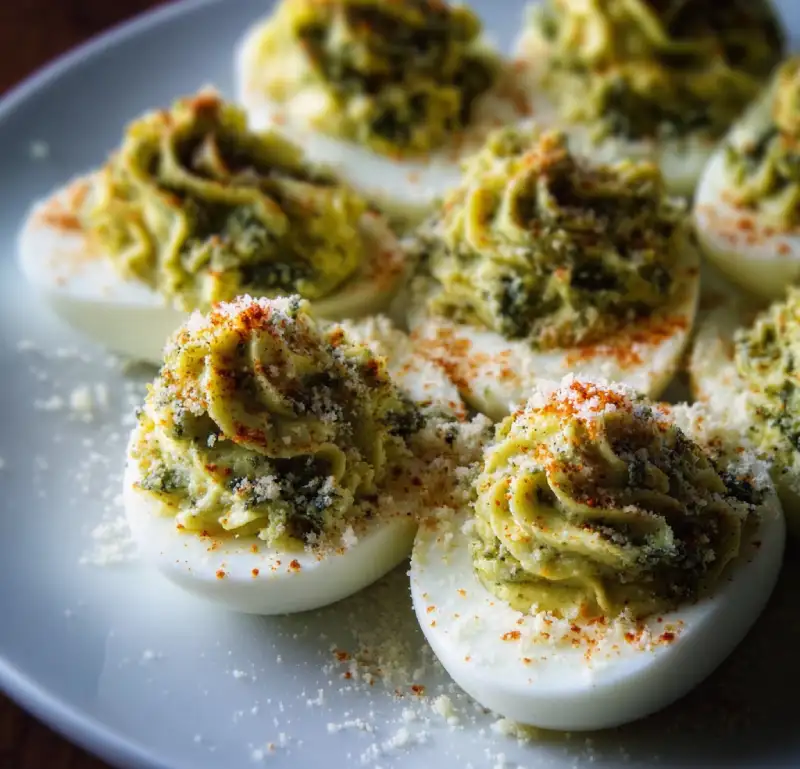
Kickstart Your Appetizer Game with Pesto Parmesan Deviled Eggs!
Get ready to elevate your appetizer platter from simply good to absolutely unforgettable with these Pesto Parmesan Deviled Eggs! Imagine: a creamy, vibrant filling, bursting with the aromatic notes of fresh basil pesto and the savory, tangy punch of Parmesan cheese, nestled perfectly in a tender egg white shell. Every bite is a delightful explosion of flavor and texture, a true testament to how a classic can be deliciously reinvented. Seriously, if you’re looking to impress without spending hours in the kitchen, these are your new best friends. See more easy recipes that deliver big on flavor and ease!
Why These Pesto Parmesan Deviled Eggs Are Unforgettable
- Creamy, Flavorful Filling: We achieve an incredibly smooth and rich filling that melts in your mouth, making each bite utterly satisfying.
- Savory Pesto Infusion: The basil pesto adds a fragrant, herbaceous depth that transforms the traditional deviled egg profile into something truly special and unexpected.
- Parmesan’s Tangy Kick: Grated Parmesan cheese isn’t just about saltiness; it brings a delightful umami and a subtle tang that perfectly balances the richness of the yolk and mayonnaise.
- Perfect Texture Balance: The tender, slightly chewy egg white perfectly contrasts with the velvety, smooth filling, creating a harmonious culinary experience.
Your Grocery List: Ingredients & Smart Substitutions
Here is what you need and why:
Hard-Boiled Eggs: The Foundation: You can’t have deviled eggs without them! I recommend using eggs that are a few days old as they tend to peel easier. If you’re cracking fresh eggs, consider adding a pinch of baking soda to the water for easier peeling.
Mayonnaise: For Creaminess and Binding: This is the classic binder that gives deviled eggs their signature creamy texture. For a lighter option, you can use Greek yogurt, but it will subtly alter the flavor profile, adding a slight tang. I prefer a good quality, full-fat mayo for the best results.
Basil Pesto: The Flavor Star (Store-bought vs. Homemade): This is where the magic happens! A high-quality store-bought pesto works wonderfully, but if you have homemade, even better! Adjust the amount based on your pesto’s intensity and personal preference. Just make sure it’s a good basil pesto, not sun-dried tomato or other varieties, unless you’re going for a different twist.
Parmesan Cheese: Salty, Umami Boost: Freshly grated Parmesan cheese is non-negotiable here. Pre-shredded varieties often contain anti-caking agents that can make the filling gritty. The salty, nutty, and slightly sharp notes of real Parmesan elevate the entire dish. Pecorino Romano could also work if you enjoy a sharper, saltier cheese.
Dijon Mustard: A Hint of Tang: Just a small amount of Dijon adds a subtle, sophisticated tang and helps to cut through the richness of the yolk and mayo. Don’t skip it; it’s a secret weapon for balancing flavors.
Red Wine Vinegar: Brightness and Balance: A touch of acid is crucial for brightening the flavors and preventing the deviled eggs from tasting too heavy. Lemon juice can be used as an alternative.
Salt and Freshly Ground Black Pepper: Essential Seasoning: Season to taste! These are fundamental for bringing out all the other delightful flavors. Start with a little and add more as needed.
Garnish Options: Fresh Basil, Toasted Pine Nuts: A sprinkle of finely chopped fresh basil adds a pop of color and a fresh aroma. Toasted pine nuts add a lovely crunch and reinforce the pesto theme. A light dusting of paprika is also a classic deviled egg garnish.
How to Make Pesto Parmesan Deviled Eggs
Follow these step-by-step photos:
1. Prepping Your Hard-Boiled Eggs
For the best results, use eggs that are a few days old, as they’re easier to peel. Once hard-boiled and cooled, gently tap and roll each egg on a hard surface to crack the shell all over. Peel carefully under cold running water to help remove stubborn shell pieces. Once peeled, pat them dry with a paper towel.
2. Separating Yolks from Whites
Carefully slice each hard-boiled egg in half lengthwise. Gently scoop out the bright yellow yolks into a medium-sized bowl. Try to keep the egg white halves intact and clean; they are your delicious edible vessels!
3. Creating the Creamy Yolk Mixture
Using a fork, mash the yolks until they are smooth and free of large lumps. Add the mayonnaise, Dijon mustard, red wine vinegar, salt, and black pepper to the mashed yolks. Mix thoroughly until the mixture is completely combined and lusciously creamy. Taste and adjust seasoning if necessary; this is your chance to get the base just right!
4. Folding in Pesto and Parmesan
Now for the stars of the show! Gently fold in the basil pesto and grated Parmesan cheese into the creamy yolk mixture. Mix until just combined. Overmixing at this stage can sometimes impact the pesto’s texture. You want to see vibrant green flecks throughout the yellow mixture. Taste again; you might want a little more pesto, depending on its intensity and your preference.
5. Filling the Egg Whites & The Finishing Touches
You have a couple of options here: For a rustic look, spoon the filling generously into each egg white cavity. For a more elegant presentation, transfer the filling to a piping bag fitted with a star tip (or just snip off the corner of a Ziploc bag) and pipe the mixture beautifully into each half. Garnish with a sprinkle of fresh basil, a few toasted pine nuts, or a dash of paprika for a pop of color. Arrange on a platter and serve immediately, or cover and chill until ready to enjoy!
Expert Tips for Success
- Achieving Perfectly Cooked Hard-Boiled Eggs: Avoid overcooking, which can lead to that unsightly green ring around the yolk. Place eggs in a saucepan, cover with an inch of cold water, bring to a rolling boil, then immediately remove from heat, cover, and let sit for 10-12 minutes. Transfer to an ice bath for 5 minutes. This method yields firm, perfectly yellow yolks. For more detailed instructions on foolproof hard-boiled eggs, check out Food Network’s guide.
- For Smooth Filling: Sieve Your Yolks: For an ultra-smooth, restaurant-quality filling, push your mashed yolks through a fine-mesh sieve with a rubber spatula before adding the other ingredients. This removes any tiny lumps.
- Piping vs. Spooning the Filling: Piping gives a professional, elegant look, perfect for parties. A simple Ziploc bag with a corner snipped off works just as well as a dedicated piping bag. Spooning is quicker and creates a more rustic, homey vibe. Both taste delicious!
- Preventing Green Rings on Yolks: The green-gray ring is a result of overcooking, causing sulfur and iron in the egg to react. Follow the exact cooking times and cooling method described above to avoid this.
- Adjusting Pesto Intensity: Pesto varies greatly in flavor. Start with the recommended amount, then taste and add more in small increments until you reach your desired pesto punch.
Serving Suggestions: What Pairs Well with Pesto Parmesan Deviled Eggs
These Pesto Parmesan Deviled Eggs are incredibly versatile! They shine brightly in many settings:
- As a Standalone Appetizer: Passed around at a cocktail party or laid out for a casual gathering, they disappear quickly!
- Alongside a Brunch Spread: Their vibrant color and fresh flavors make them a perfect addition to quiches, fruit salads, and pastries.
- Part of a Picnic Platter: Easy to transport and delightful to eat al fresco, they’re a picnic essential.
- Complementing Italian-Inspired Meals: These eggs would be right at home before a pasta dish, a chicken parmesan bake, or alongside an antipasto platter.
Storing and Reheating Your Deviled Eggs
Deviled eggs are best enjoyed fresh, but you can certainly prepare them ahead of time.
- Optimal Storage Practices (Separated vs. Assembled): The ideal way to store deviled eggs for maximum freshness is to keep the cooked egg white halves and the filling separate. Store the whites in an airtight container in the refrigerator, and the filling in another airtight container (or piping bag) for up to 2 days. Assemble just before serving. If you must assemble them ahead, cover the platter tightly with plastic wrap to prevent drying out and refrigerate for no more than 24 hours.
- Shelf Life and Freshness Tips: Once assembled, deviled eggs are best consumed within 24 hours. Hard-boiled eggs, unpeeled, can last up to a week in the fridge.
- Reheating: A Gentle Approach (If Applicable): Deviled eggs are typically served chilled or at room temperature. They do not reheat well, as the texture of the yolk filling can become unappetizing. Avoid attempting to warm them up.
Frequently Asked Questions About Pesto Parmesan Deviled Eggs
Can I make these ahead of time?
What kind of pesto should I use?
How do I prevent the filling from being too runny?
Are there dairy-free alternatives for Parmesan?
How long do hard-boiled eggs last?
Pesto Parmesan Deviled Eggs
- Total Time: 27 minutes
- Yield: 12 servings 1x
Description
These Pesto Parmesan Deviled Eggs reinvent a classic with vibrant basil pesto and sharp Parmesan. They are perfect for any gathering and an absolute crowd-pleaser.
Ingredients
- 6 large hard-boiled eggs, cooled and peeled
- 1/4 cup mayonnaise (or more, to taste)
- 2–3 tablespoons basil pesto (store-bought or homemade)
- 2 tablespoons finely grated Parmesan cheese
- 1 teaspoon Dijon mustard
- 1/2 teaspoon red wine vinegar (or lemon juice)
- Salt and freshly ground black pepper, to taste
- Fresh basil leaves, chopped, for garnish
- Toasted pine nuts, for garnish (optional)
Instructions
- 1. Prepare Eggs: Carefully slice each hard-boiled egg in half lengthwise. Gently scoop out the yolks into a medium bowl, keeping the egg white halves intact.
- 2. Mash Yolks: Mash the yolks with a fork until smooth.
- 3. Mix Filling Base: Add mayonnaise, Dijon mustard, red wine vinegar, salt, and black pepper to the mashed yolks. Mix thoroughly until creamy and well combined.
- 4. Incorporate Flavor: Gently fold in the basil pesto and grated Parmesan cheese until just combined. Taste and adjust seasoning or add more pesto if desired.
- 5. Fill and Garnish: Spoon or pipe the filling into each egg white half. Garnish with chopped fresh basil and toasted pine nuts (if using).
- 6. Chill and Serve: Arrange on a platter, cover tightly, and chill until ready to serve. Best served fresh but can be made up to 24 hours in advance.
- Prep Time: 15 mins
- Cook Time: 12 mins